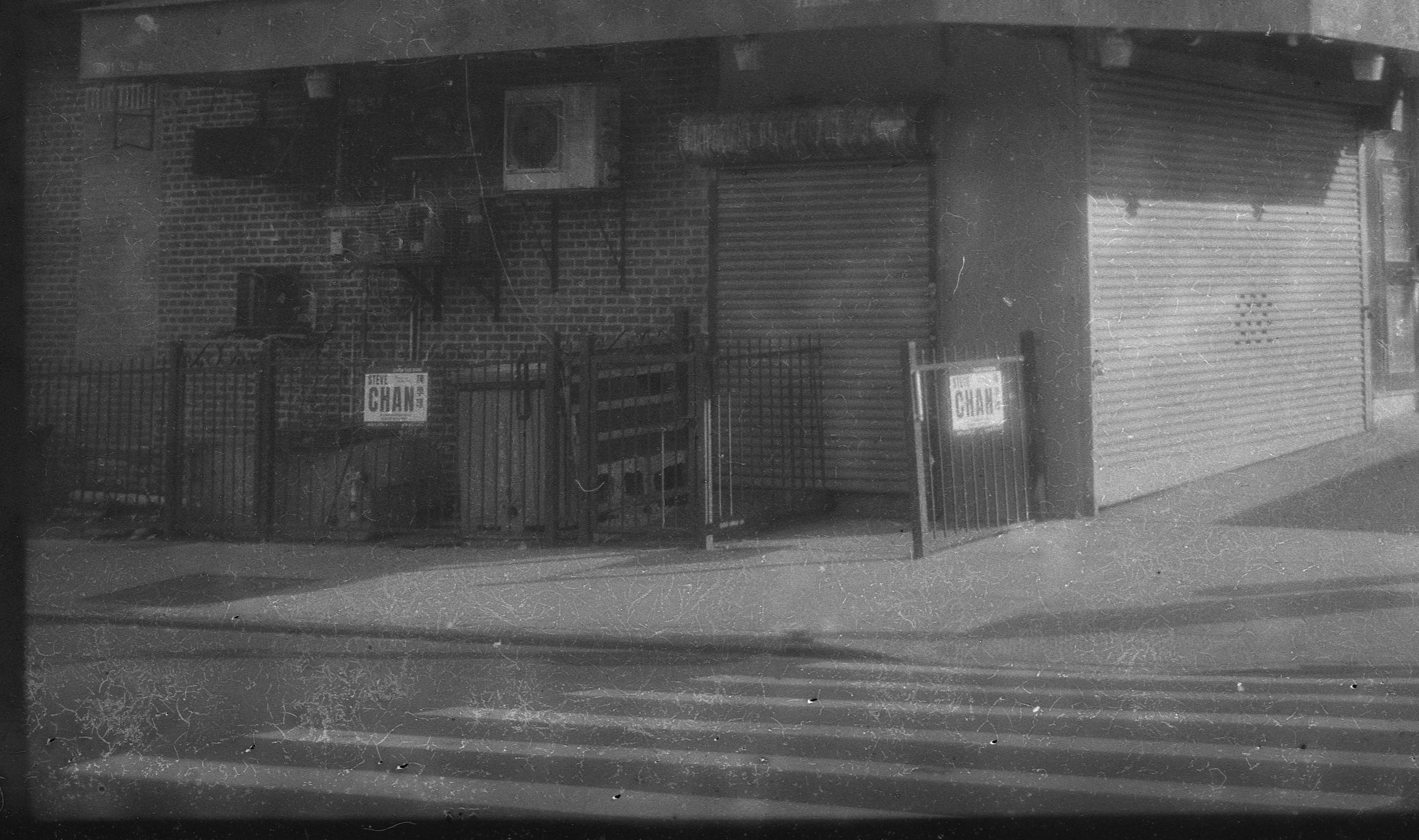
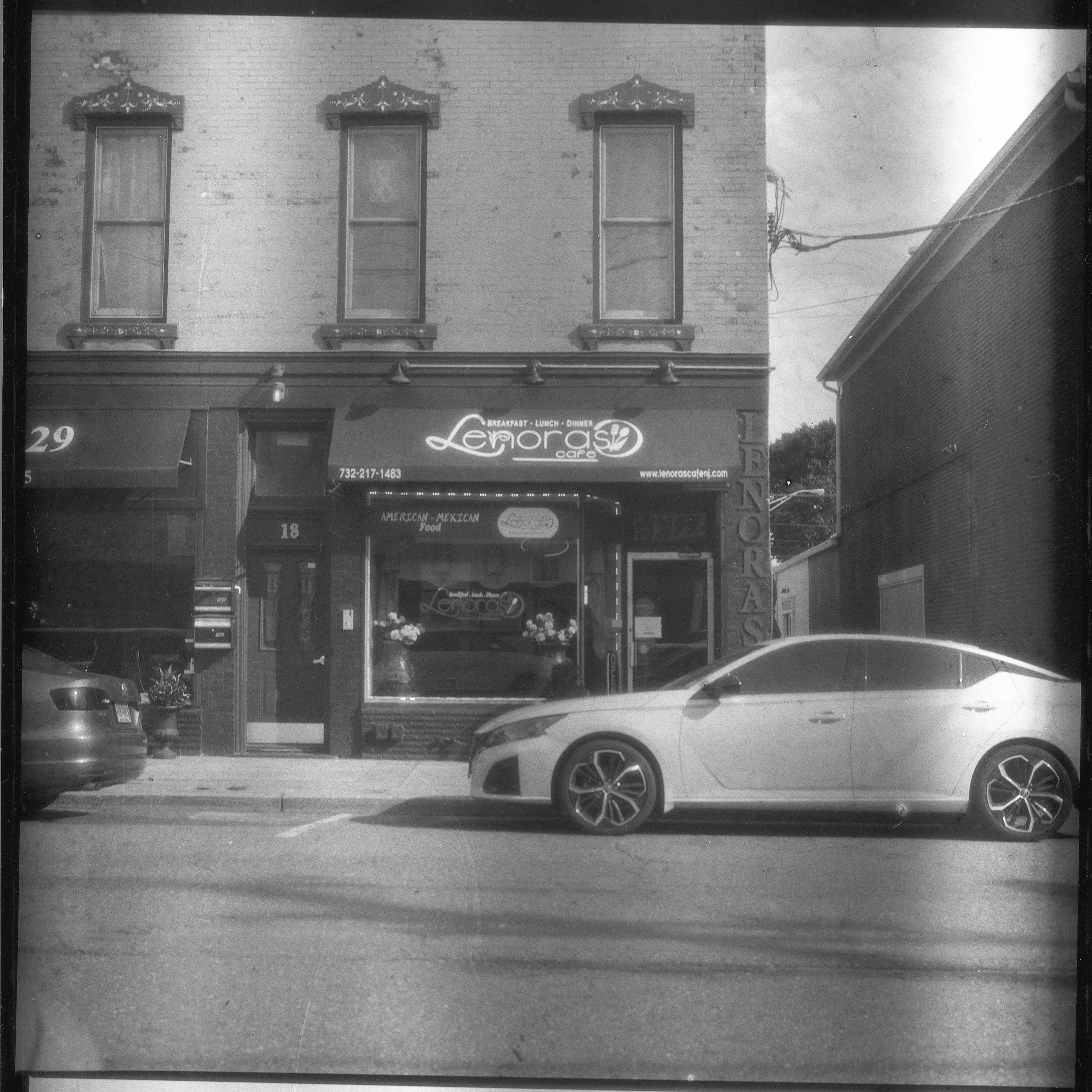
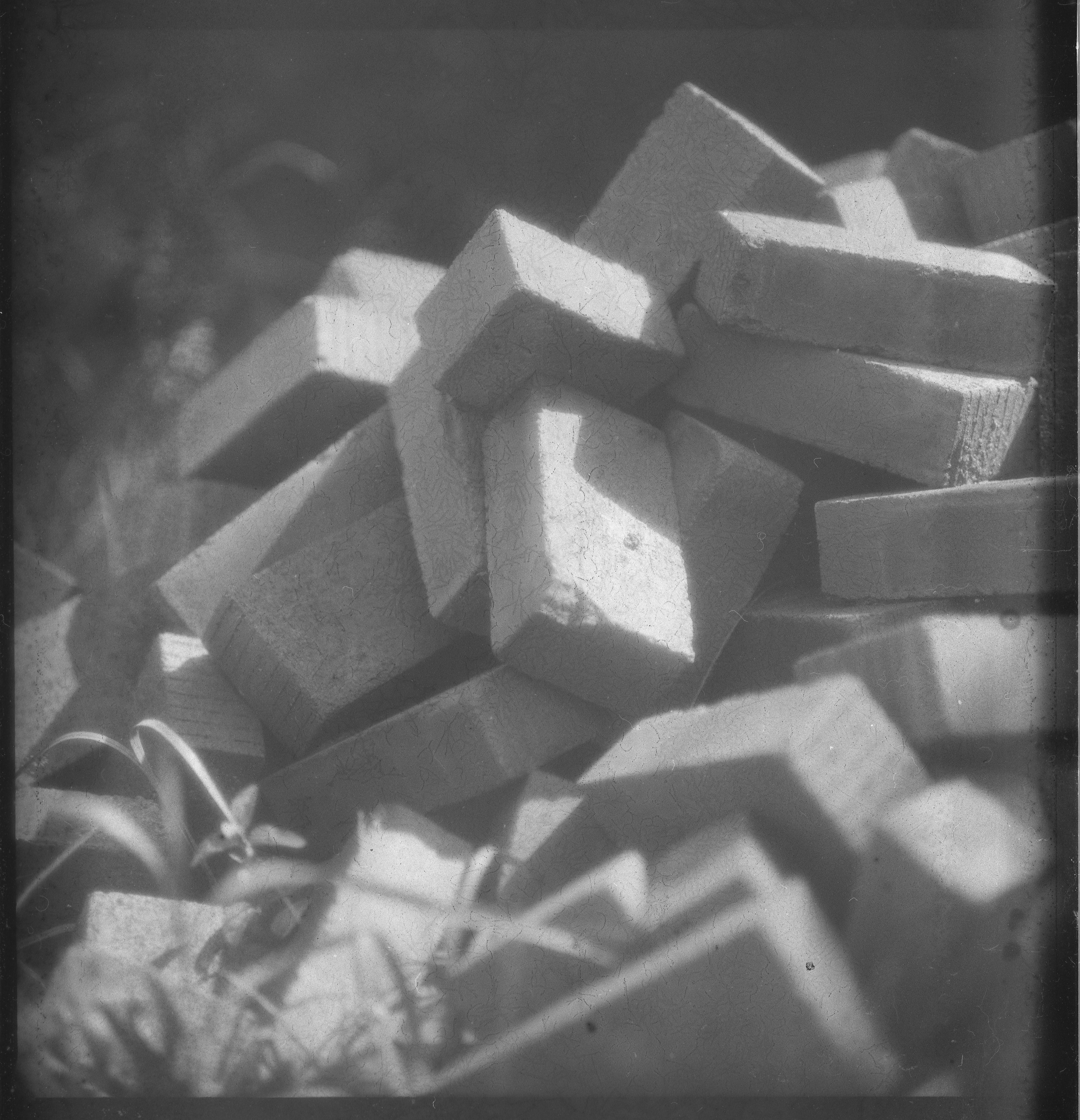
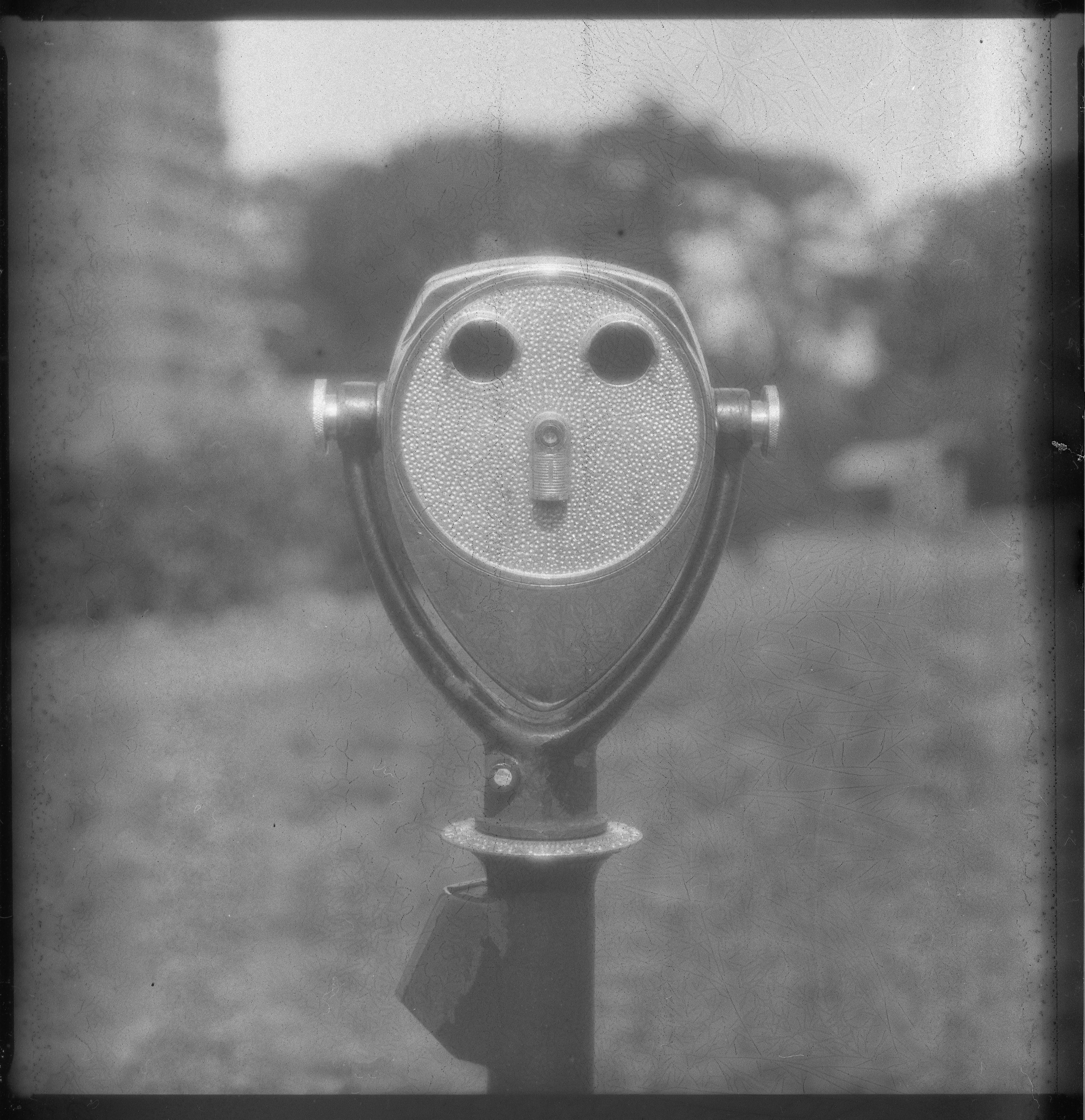
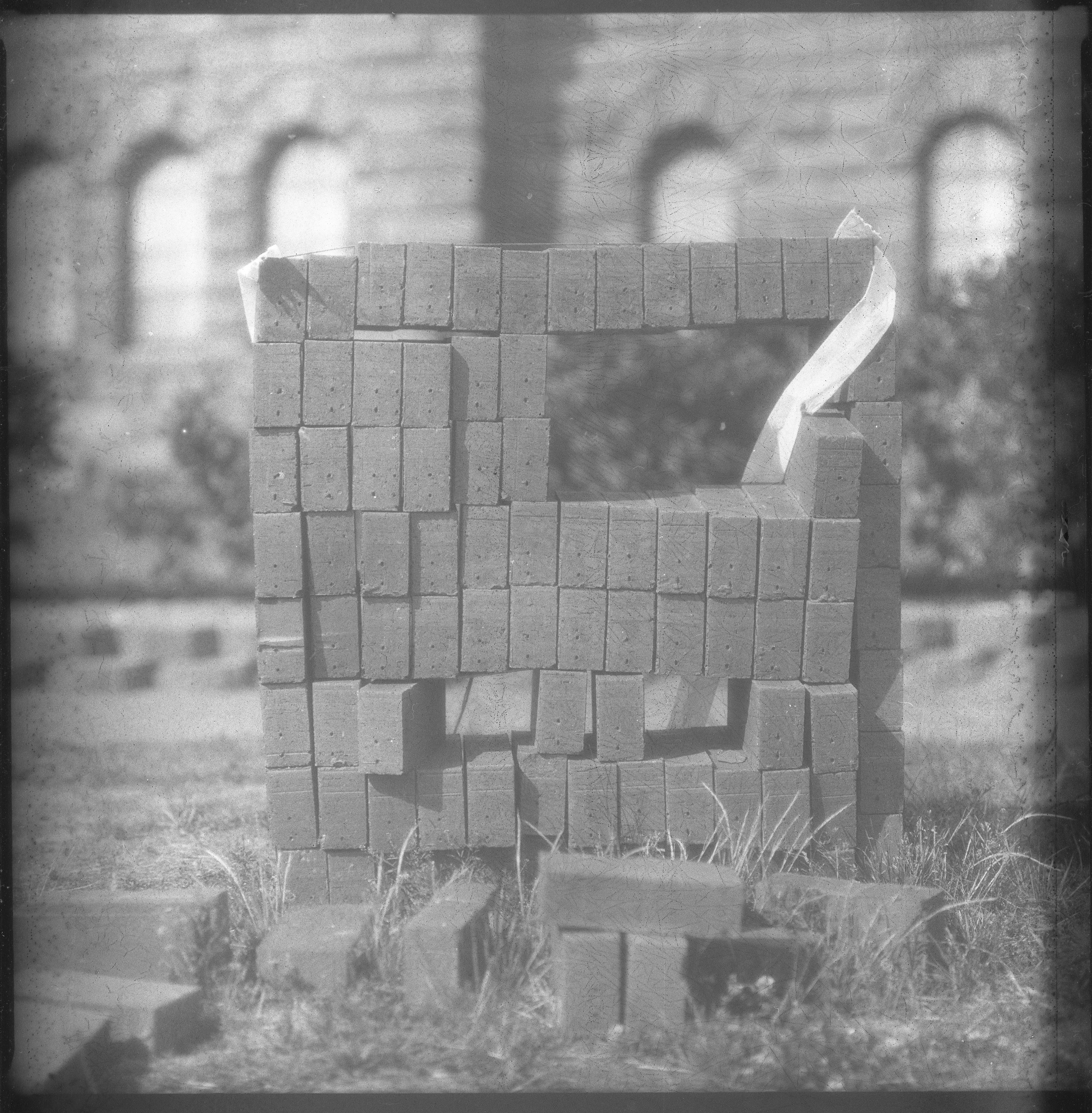
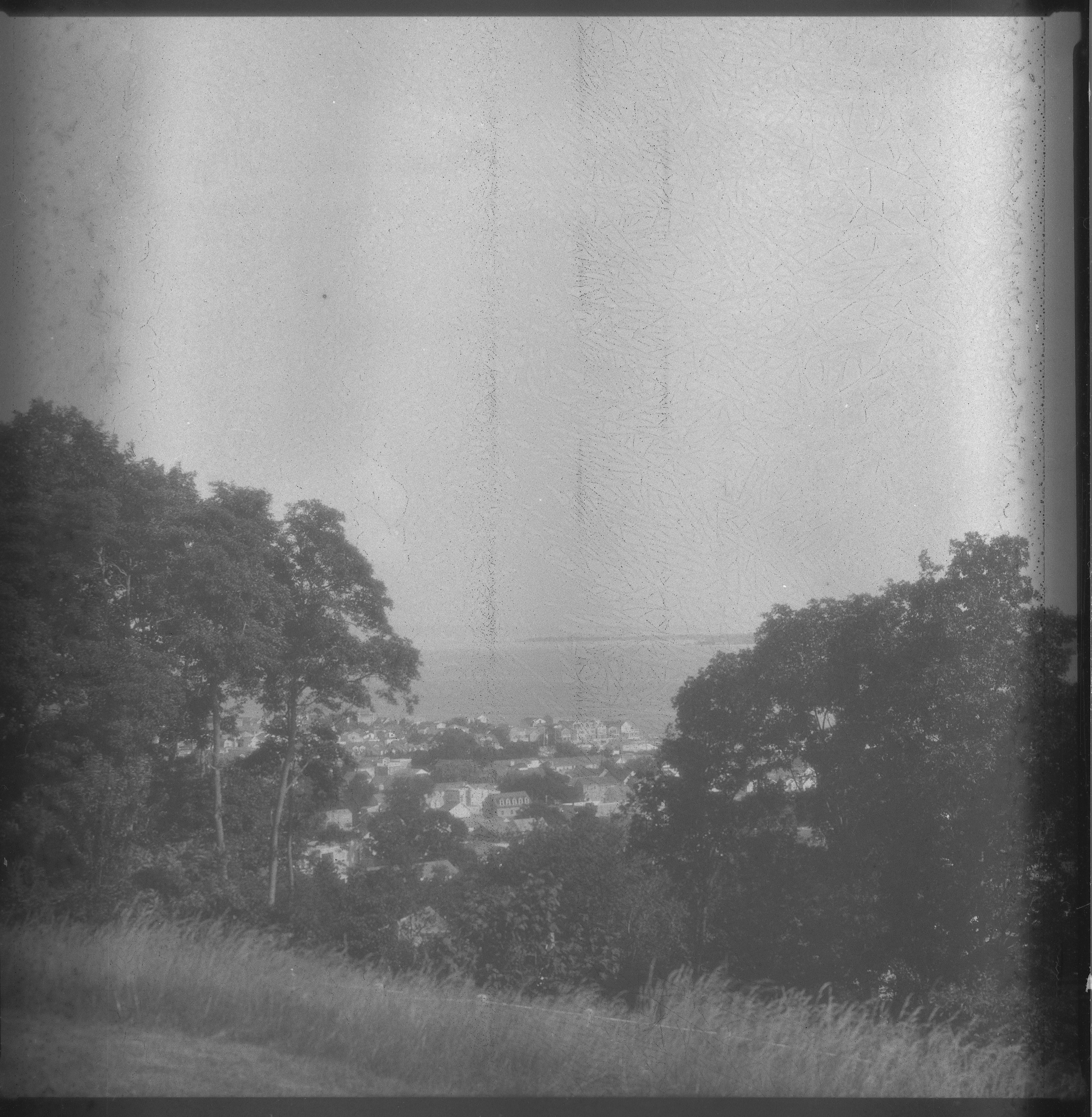
Shot my third roll of Polyfilm Ortho this past weekend when we were in Brooklyn. I didn't hold off until the Mermaid Parade; I shot it around Sunset Park the day before when we were walking around. Shot in my Zeiss Ikon Nettar 517/16, the smallest decent medium format camera I have. Per Ihor's suggestion, I shot it at EI 32, and developed in Rodinal 1:25 for 8 minutes. Six minutes of pre-soak, acid stop bath, 5 minutes of post fixer washing, and a final rinse in distilled water and Photo-Flo. I don't think it helped much; I think this batch just has issues.
The first couple of shots seem to have some kind of fog at the edges. I haven't seen this with other rolls of film I've put through the camera.
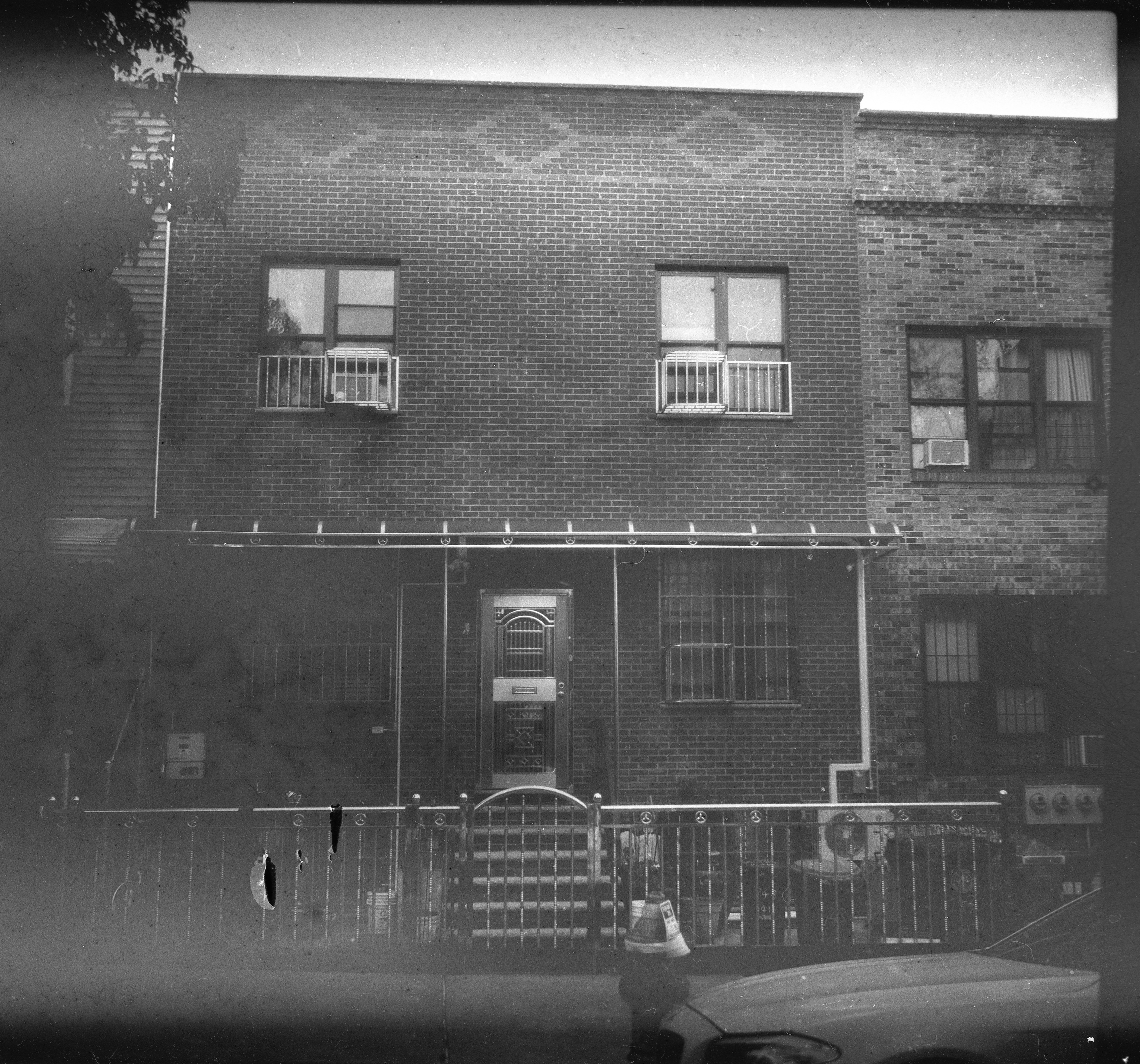
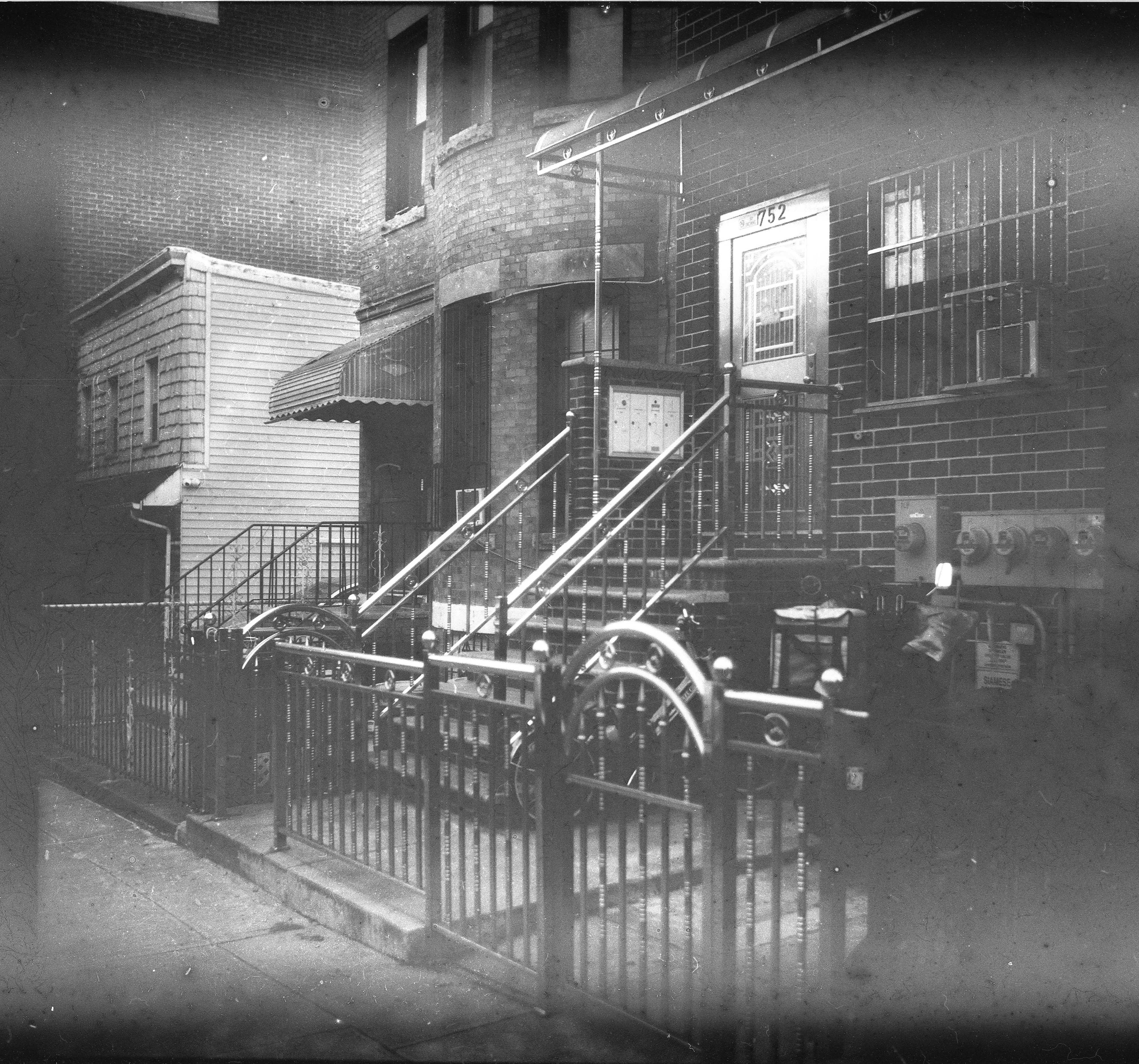
The third shot starts to show the plasticizer effect, particularly in the sky but also on the brick wall. It gets worse with the fourth shot, particularly in the bricks at top.
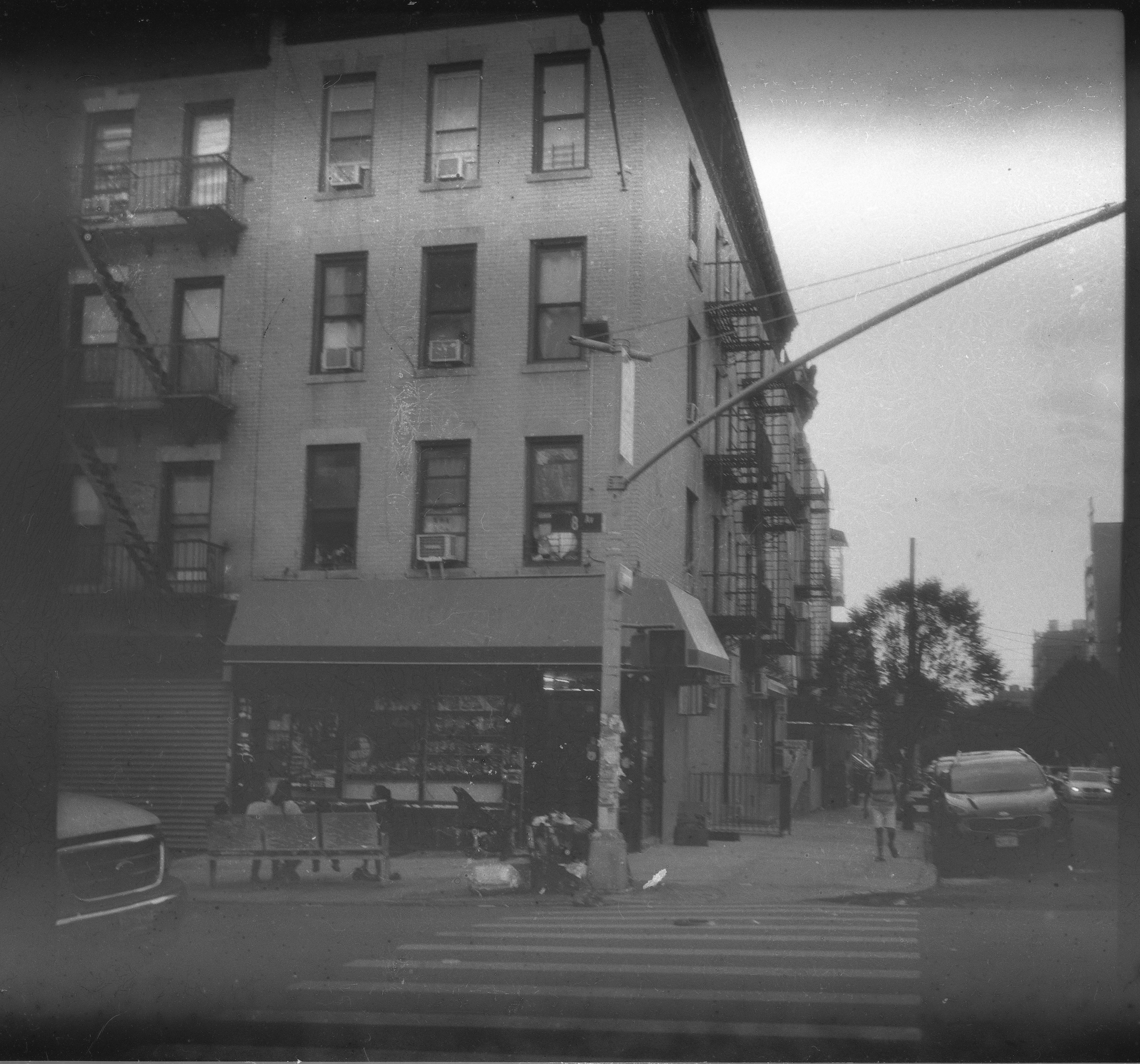
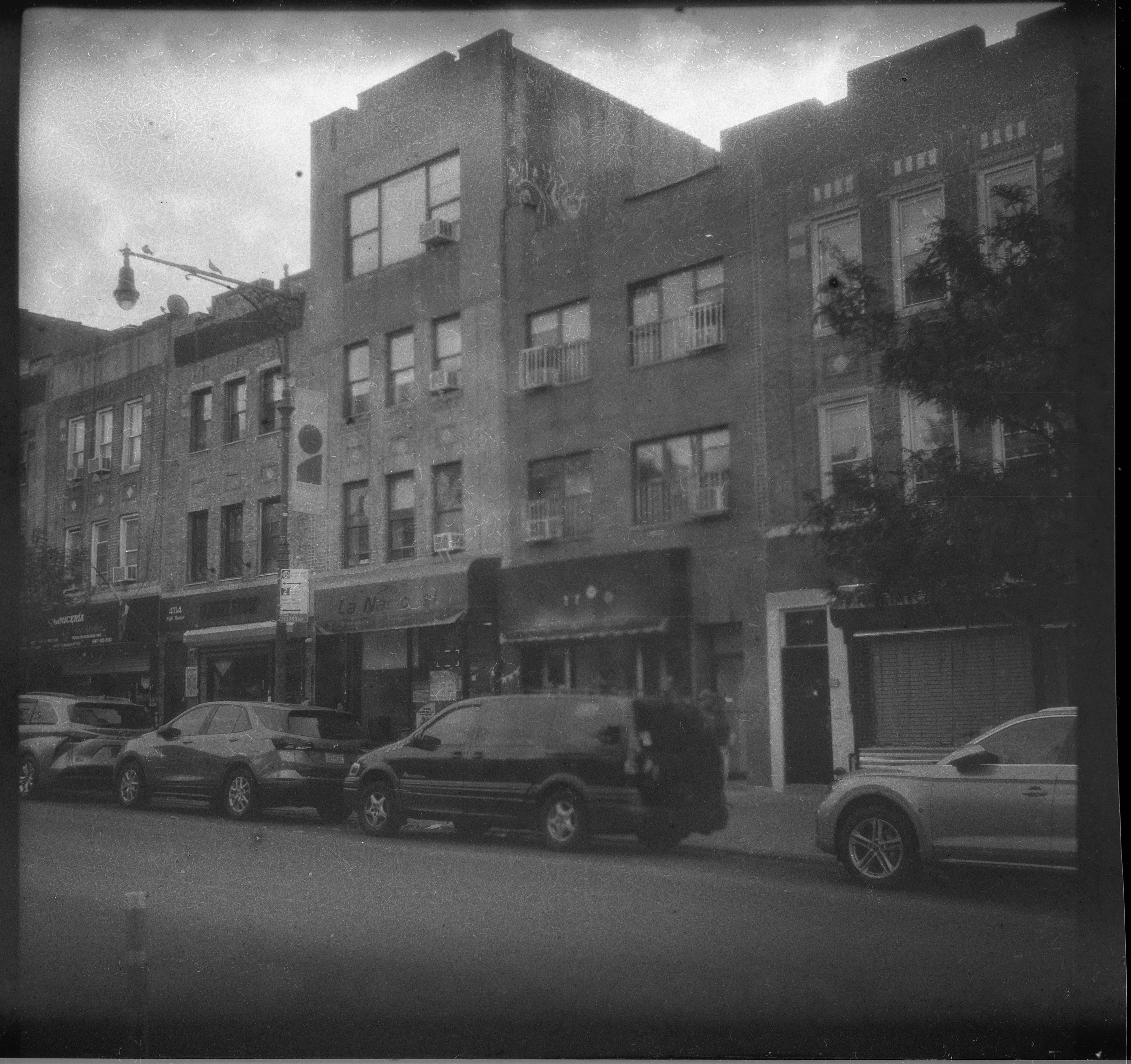
In the fifth shot, we start to see signs of mottling too.
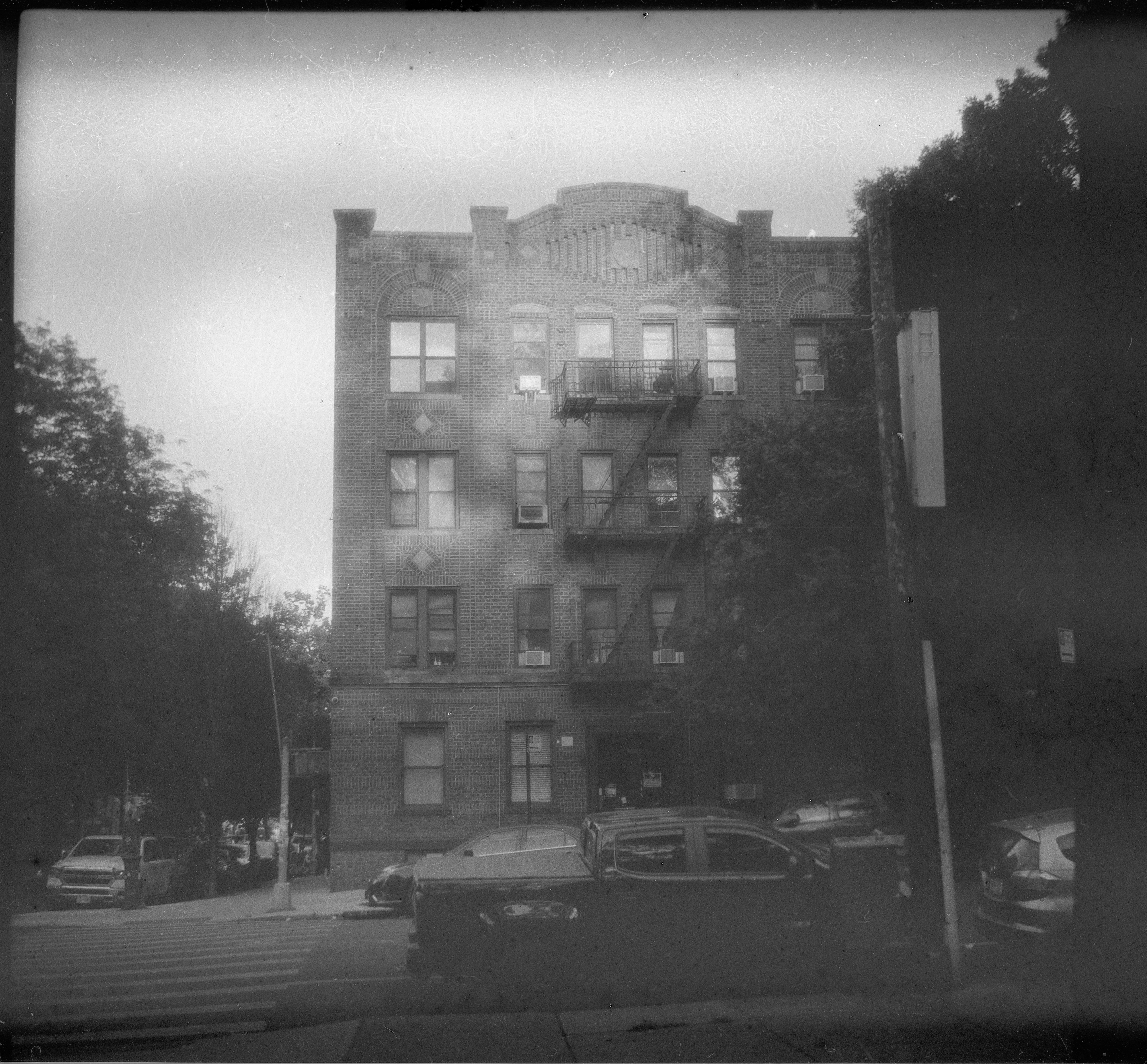
The sixth and seventh shots continue the pattern. Seven is particularly dramatic in the plasticizer lines, particularly evident in the lower part of the picture, shown in close-up.
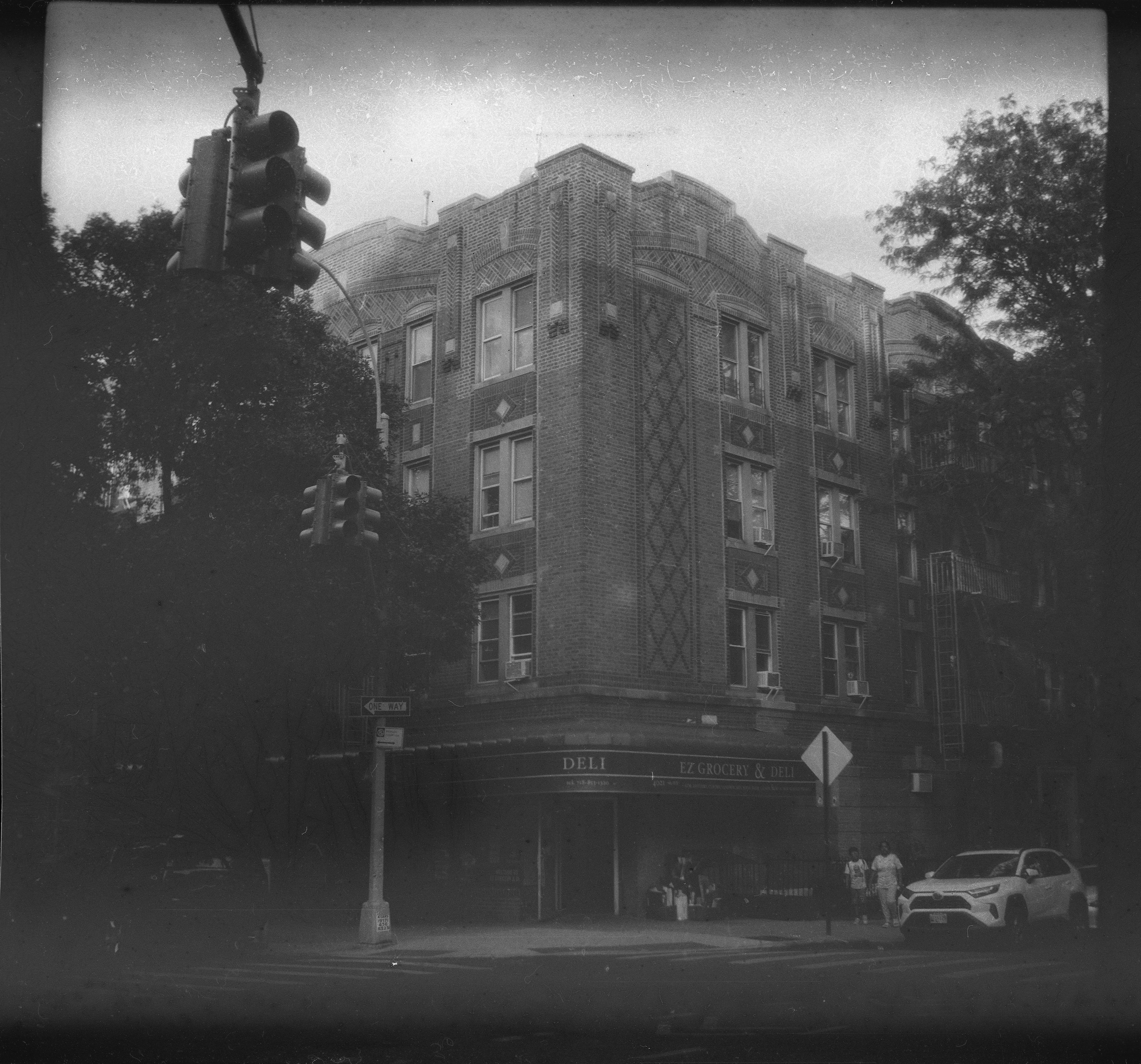
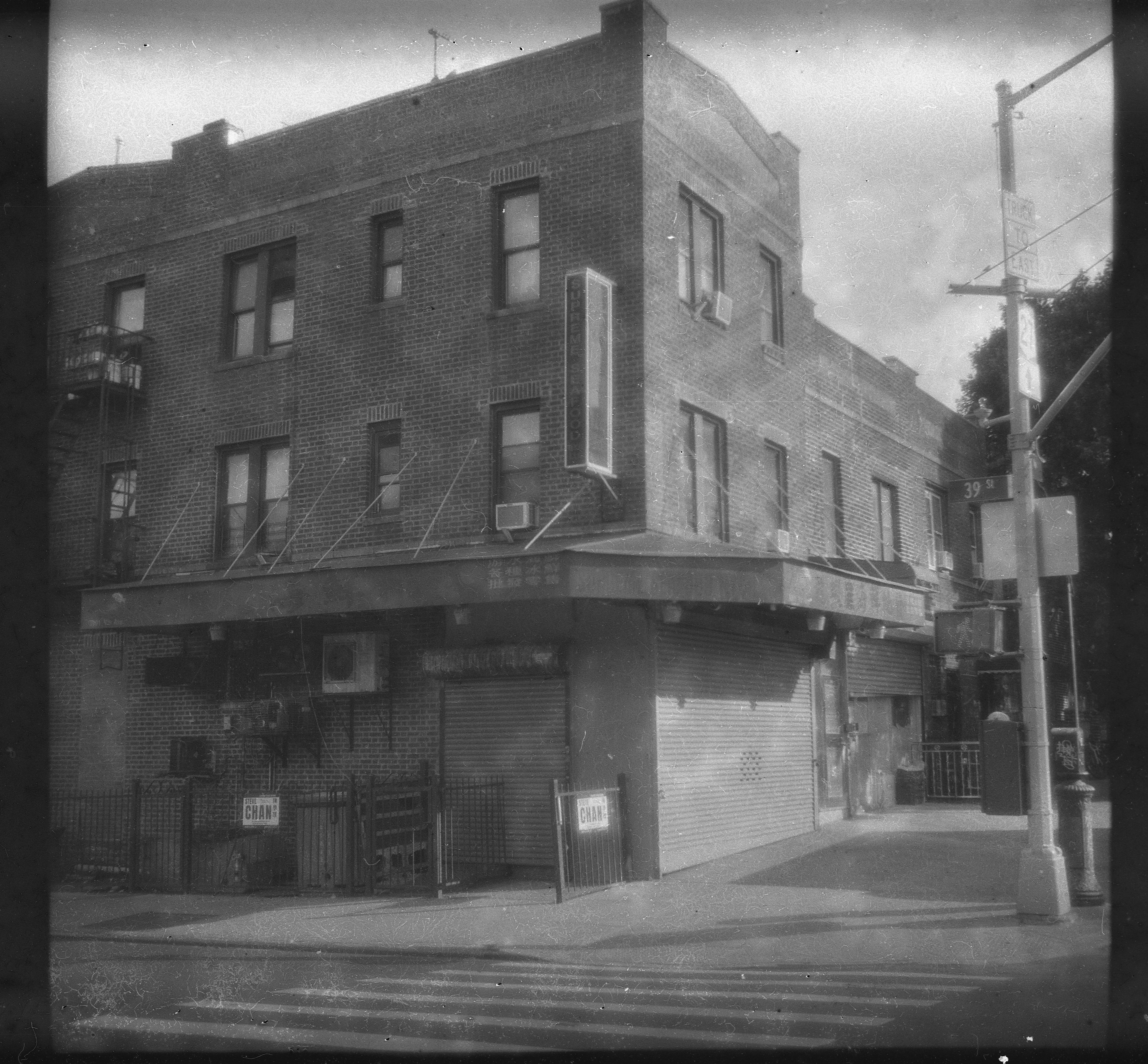
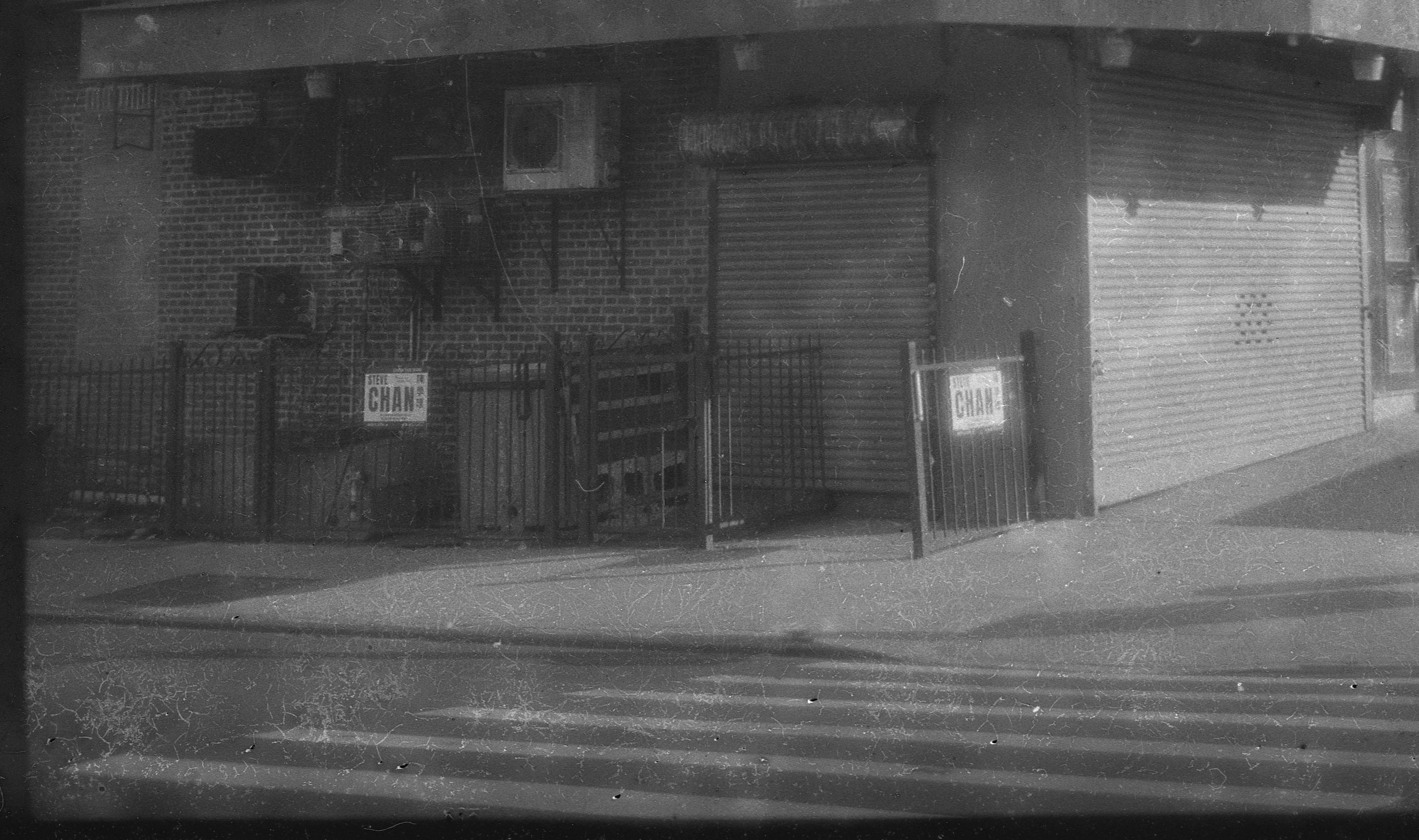
Eight and nine are more of the same. Ten has some dramatic mottling to go with the lines, as well as black holes in the emulsion.
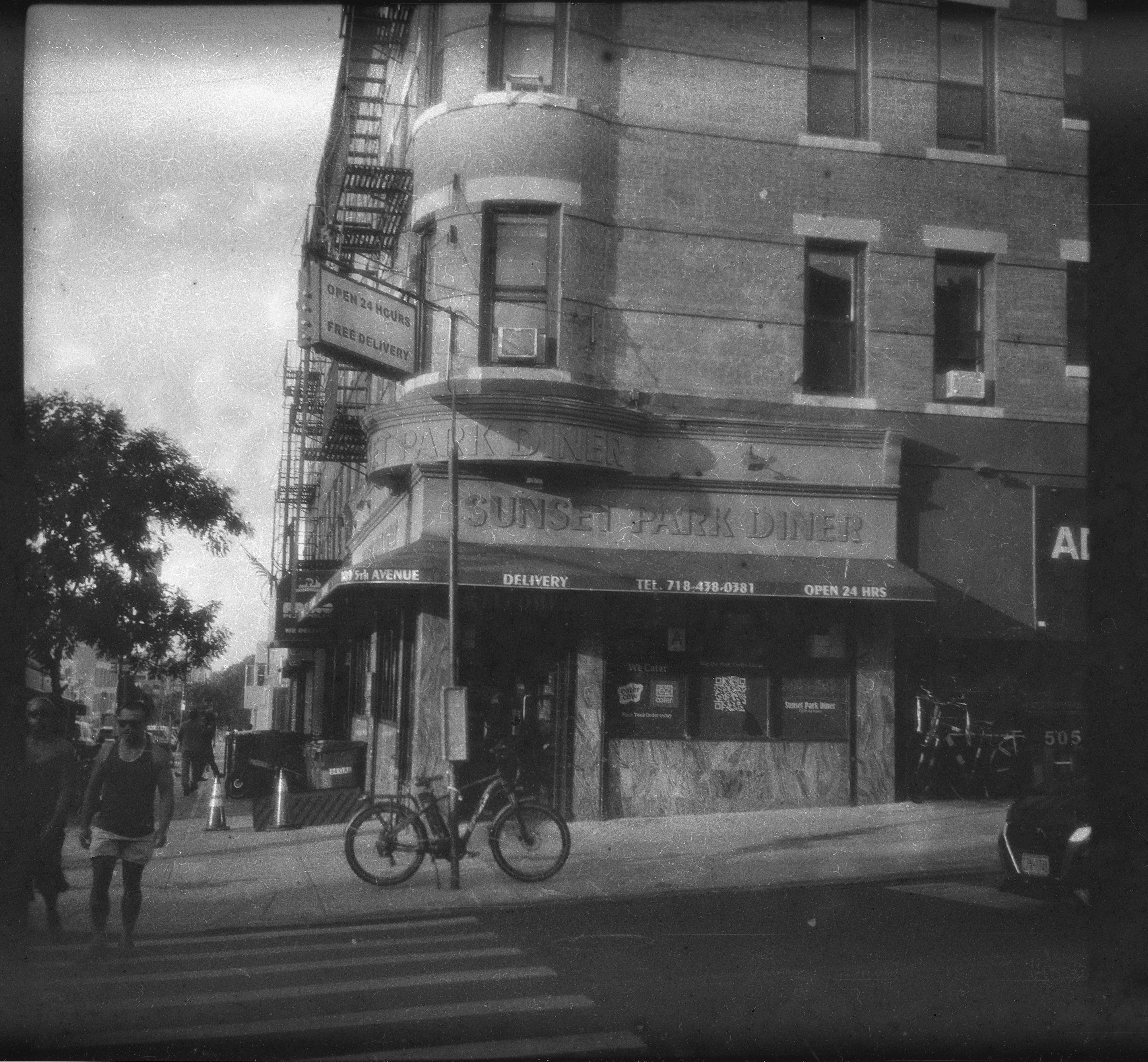
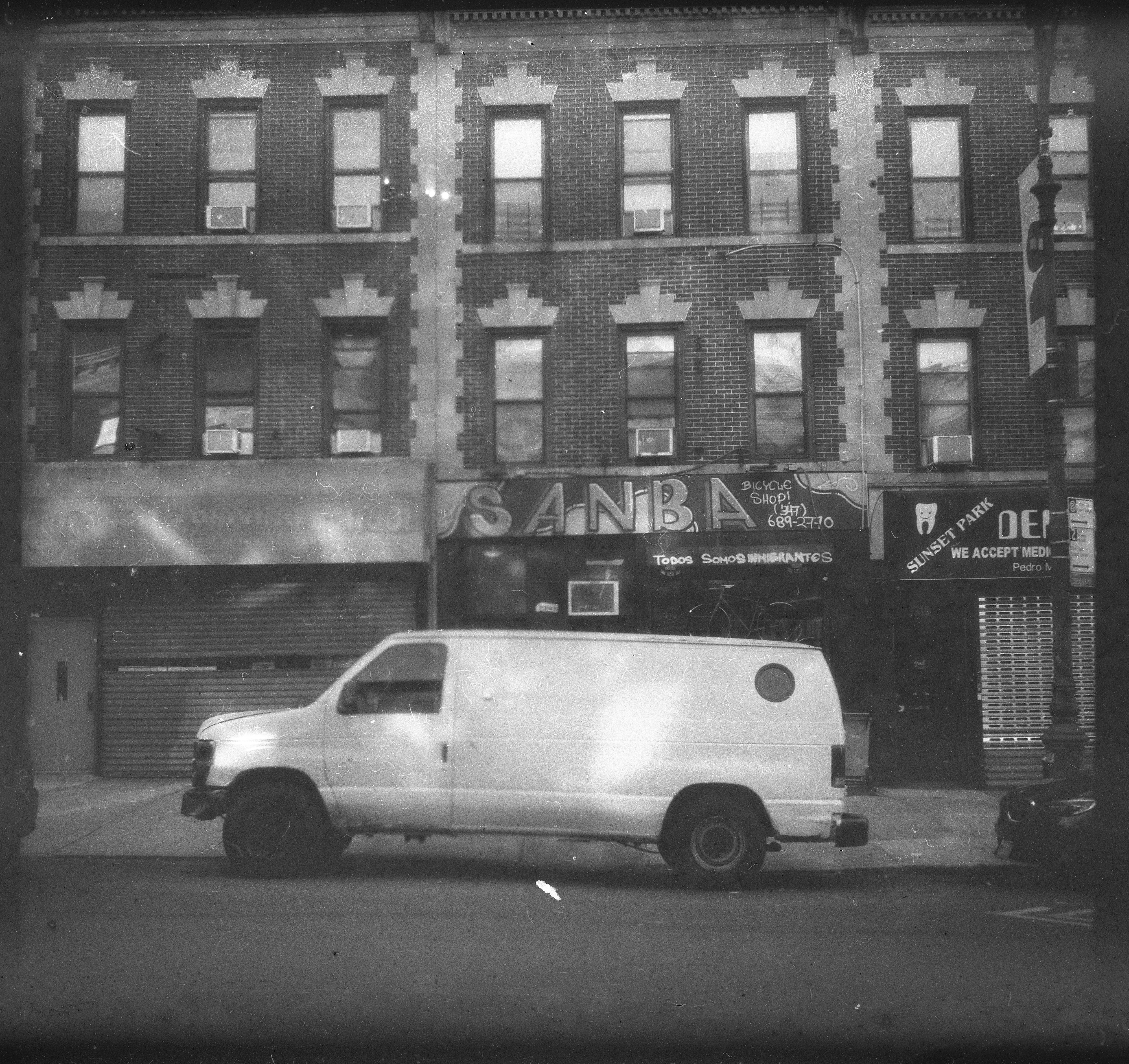
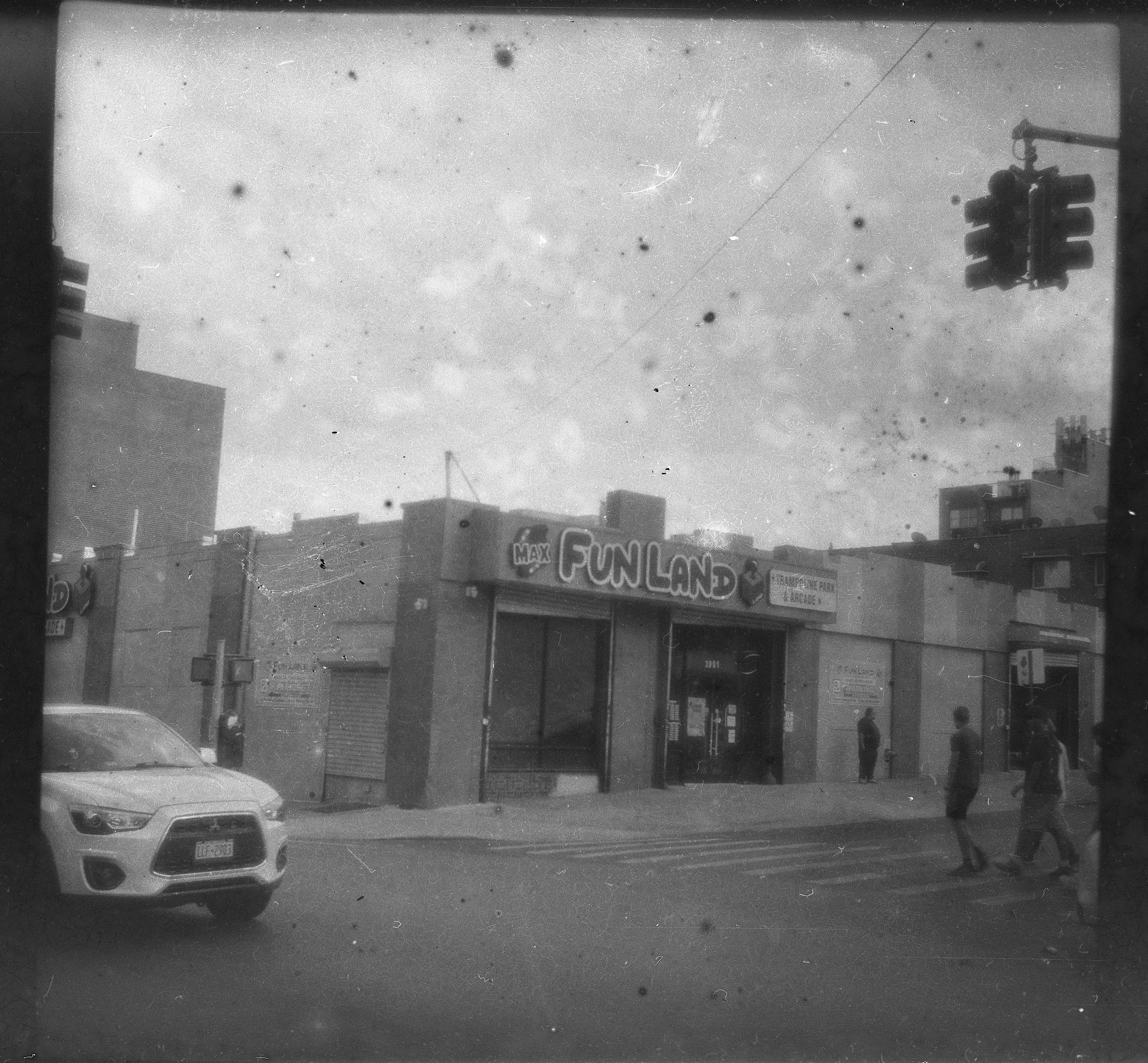
Eleven and twelve dial back the faults. Eleven is kind of blurry, which is on me, not the film. But there are still the issues we've been seeing throughout the roll.
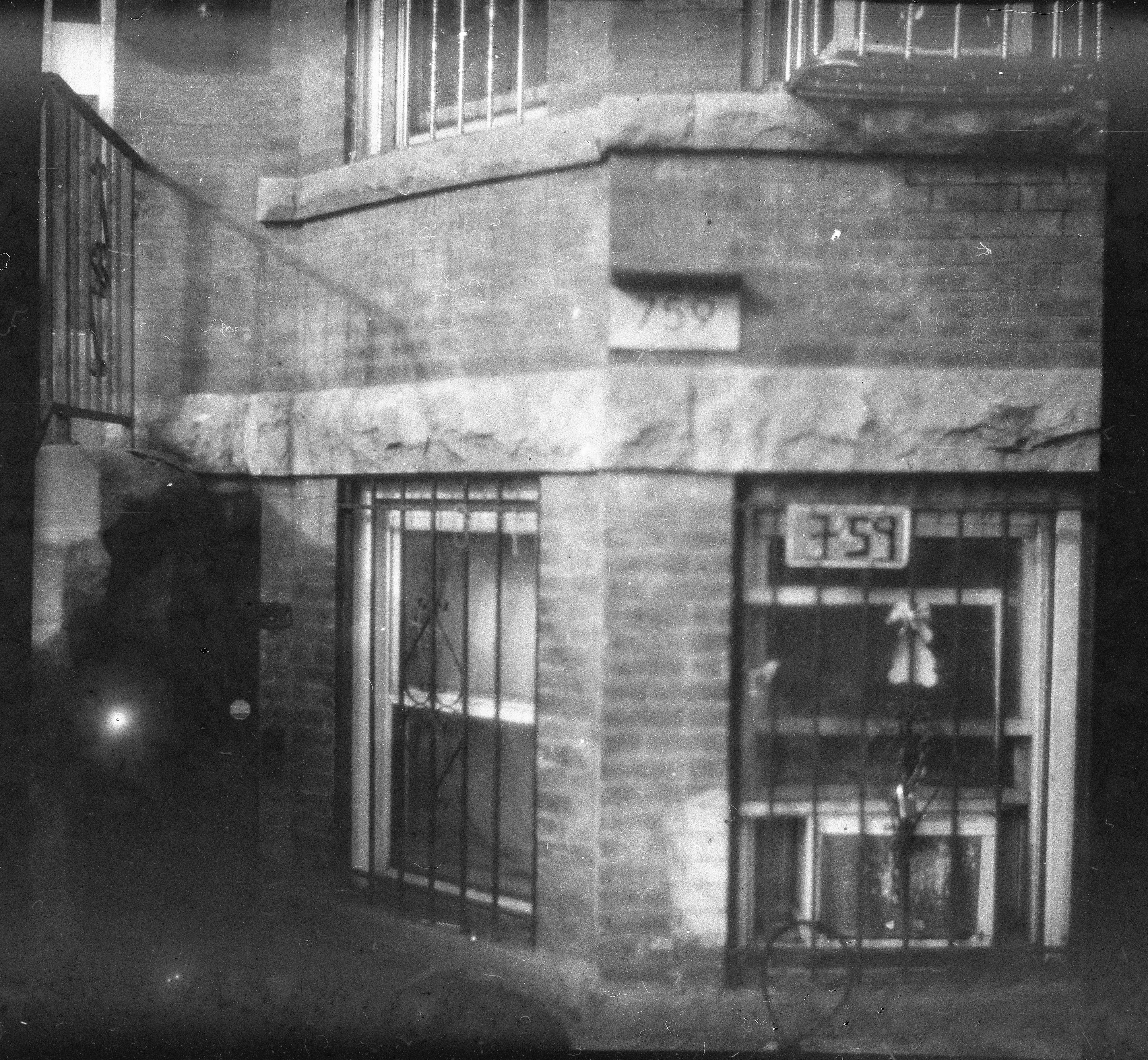
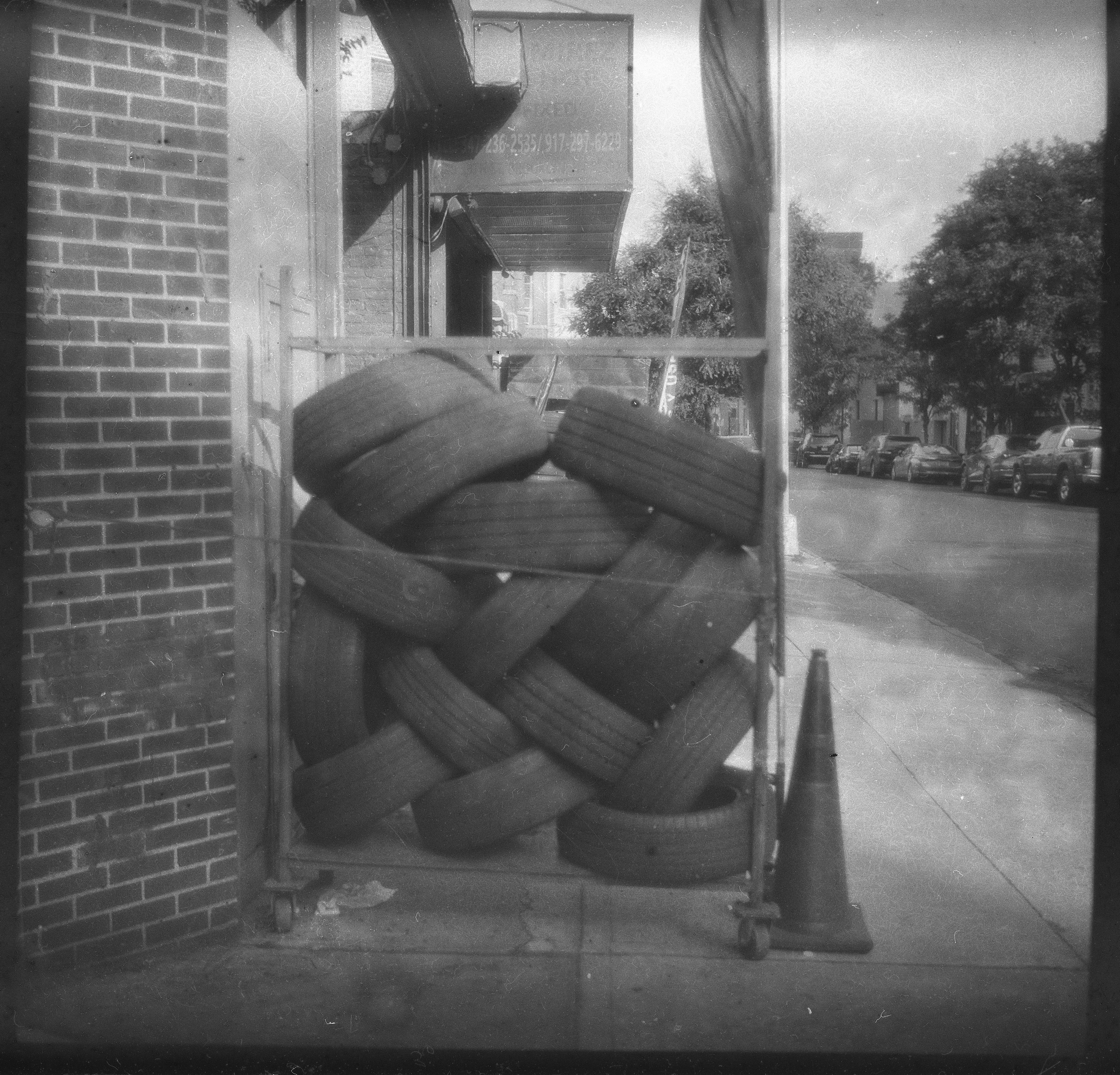
I have one more roll of this to shoot; I'll probably take it to Florida and use it for something that's not critical given the issues I've seen on the first three rolls and expect much the same result. Changing the development process doesn't seem to make a significant difference in the result; 8 minutes worked well from an exposure standpoint, but the artifacts were worse than on roll 2. Ihor and Vitalii have said they think they've figured out what the issues are. I look forward to getting another batch and proving them right.
Posted at 11:03 AM
Link to this entry
After going back and forth with Ihor and getting recommendations on how to best develop this wacky film of his, I shot a second roll yesterday. I switched from the Kiev 88 to my Hasselblad 500cm, but made a mistake in loading the film that resulted in me getting only 10 frames and having some overlap between them. I gave the film a pre-wash that lasted seven minutes, cut development from 15 minutes to 12, used an acid stop bath as recommended (I usually stop with water), and rinsed after fixing for ten minutes, something I usually avoid because I use an alkaline fixer and hypo washes out of film much more quickly when you use an alkaline fixer.
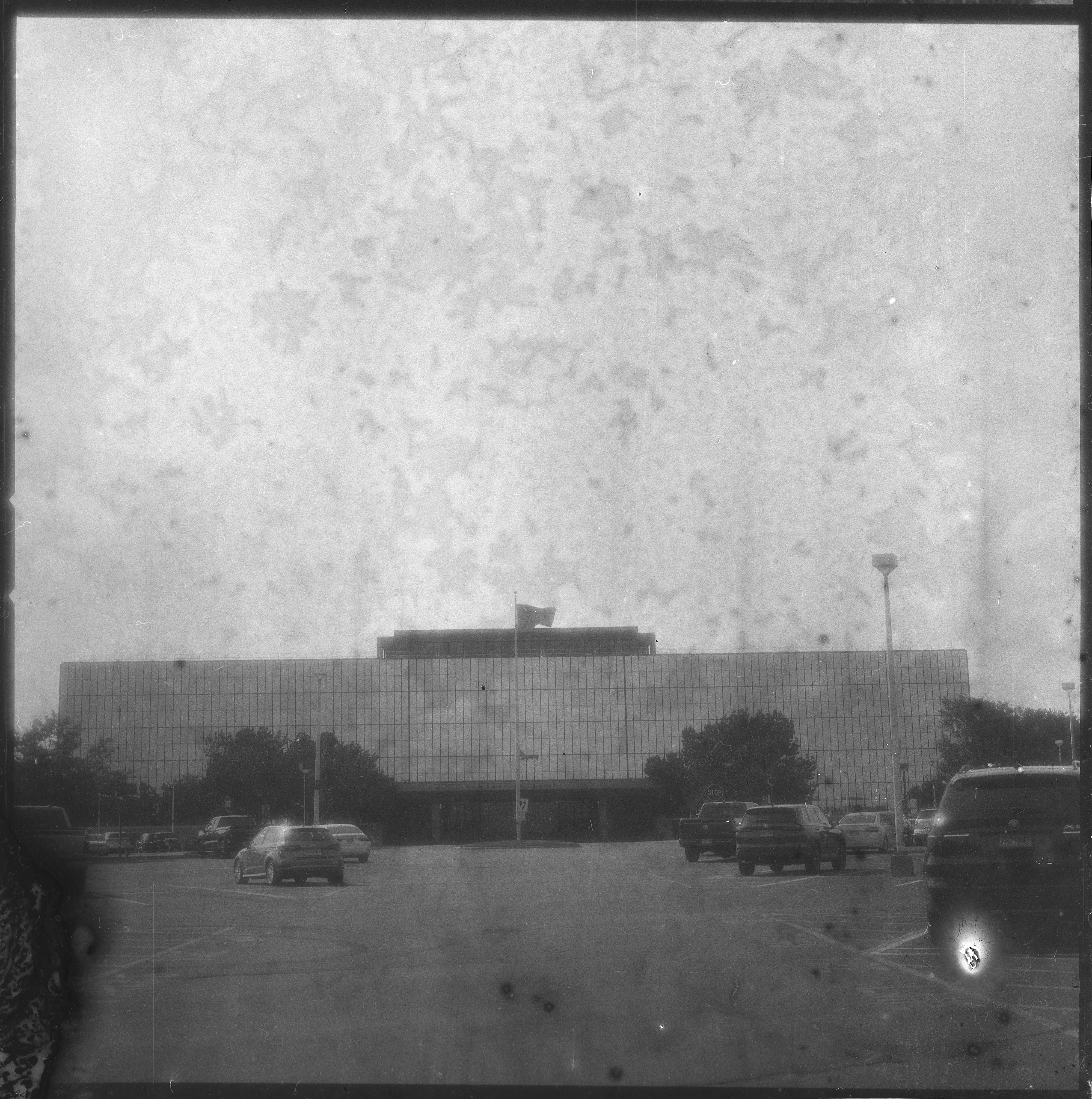
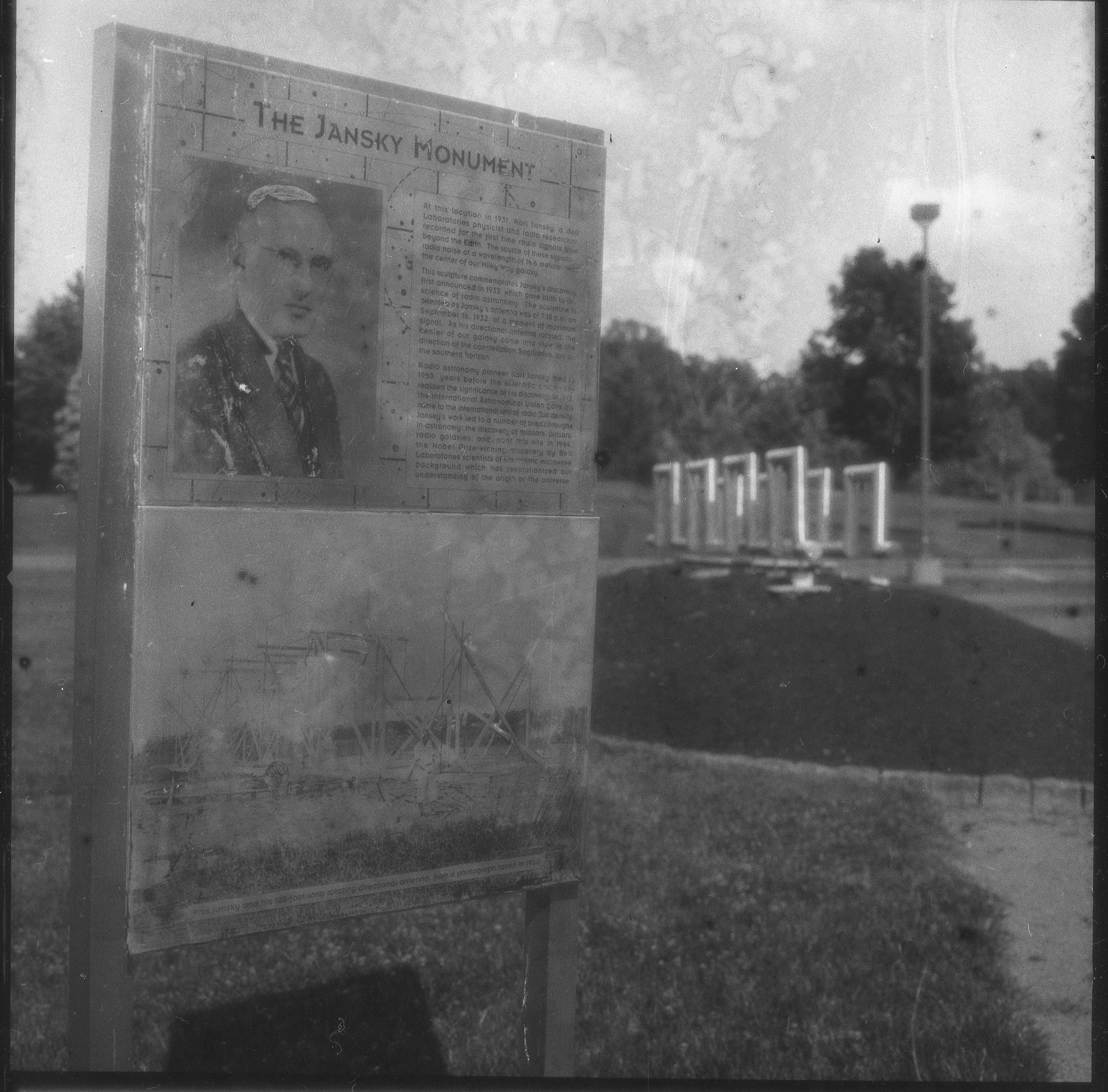
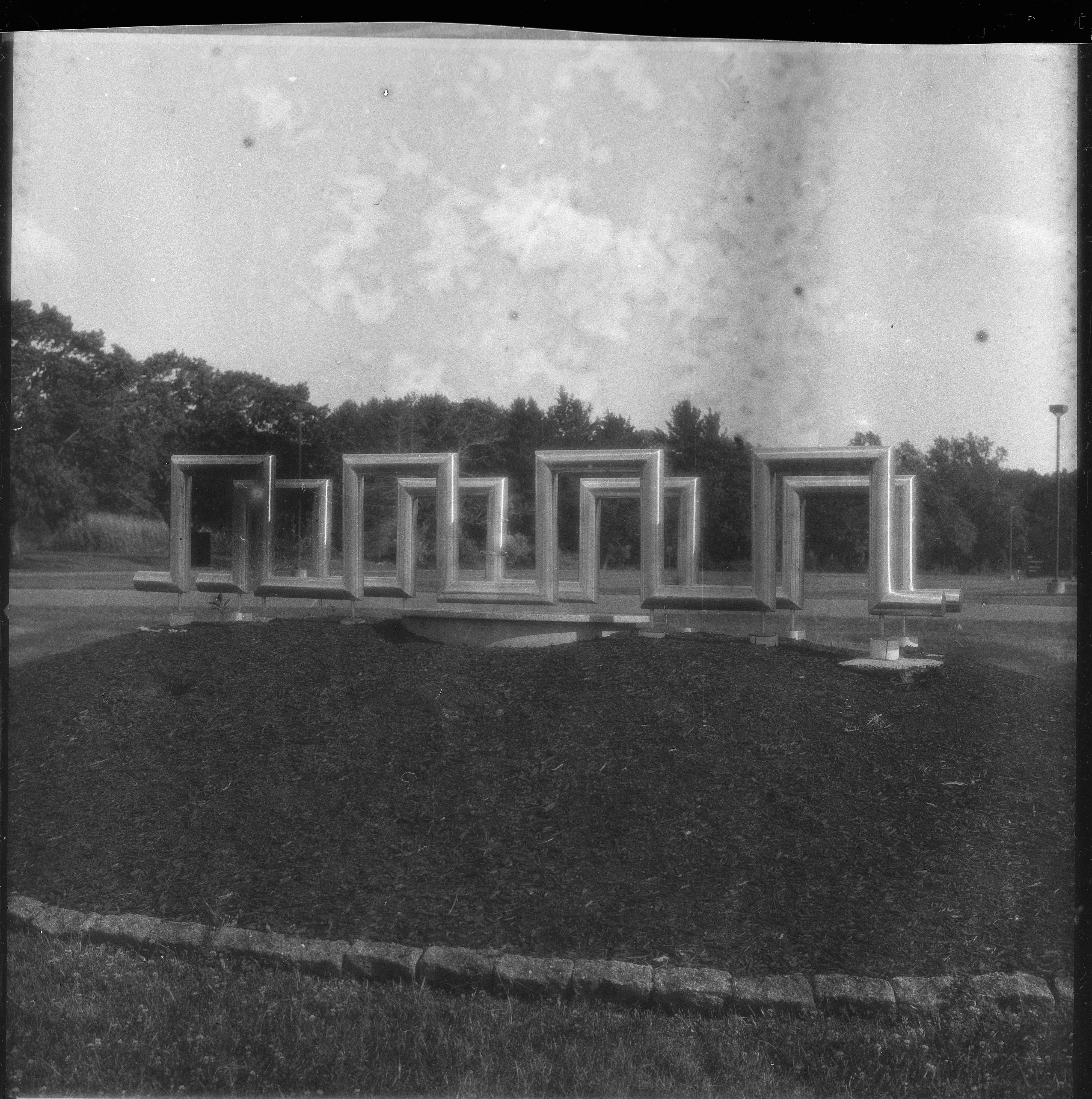
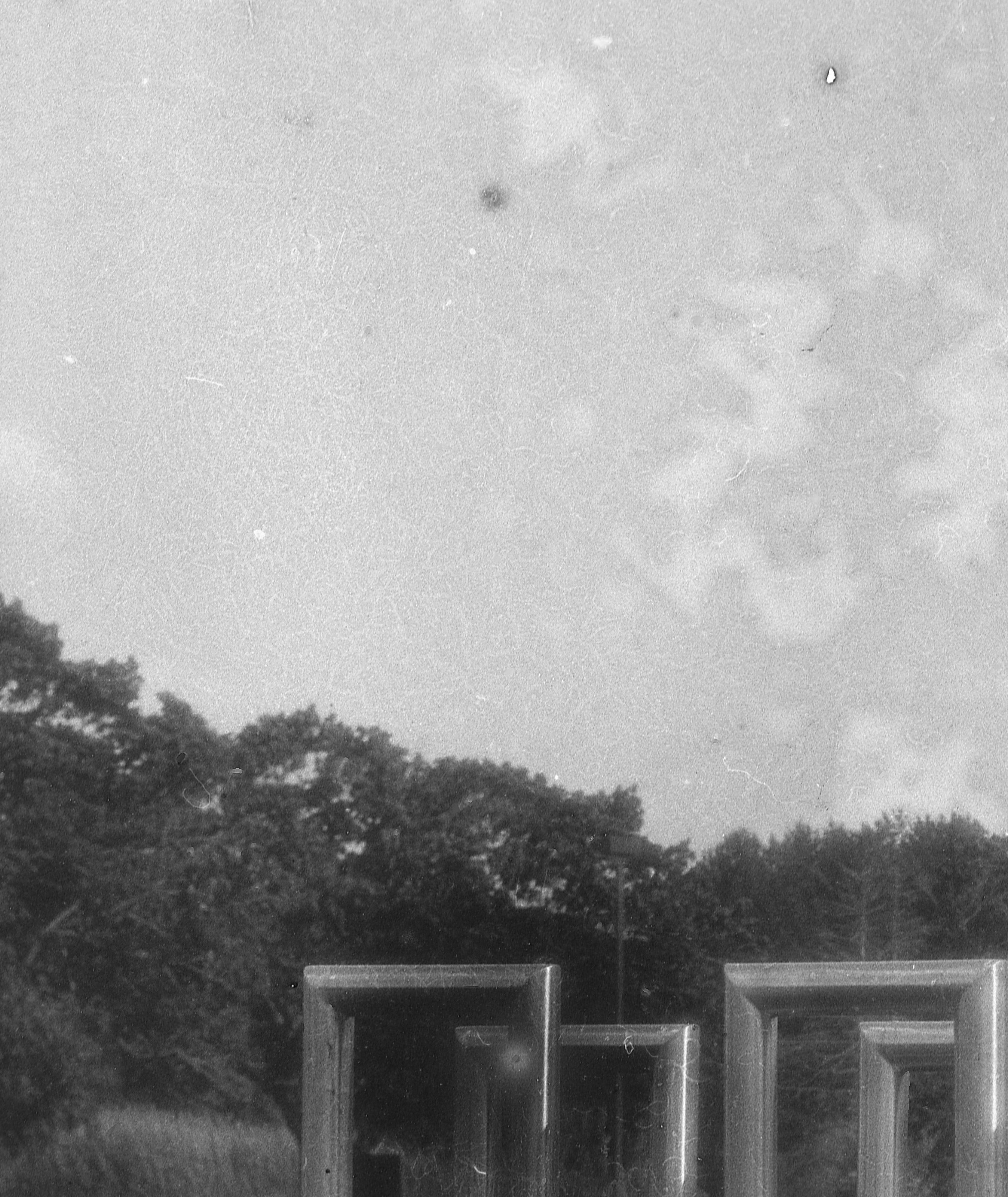
The first three photos show that the lines I got on the first roll are dramatically less present. They're still there, but less noticeable. They are particularly visible in flat color areas, like the sky. This closeup shows the upper left portion of the third photo where they are visible both in the sky and on the metal of the sculpture.
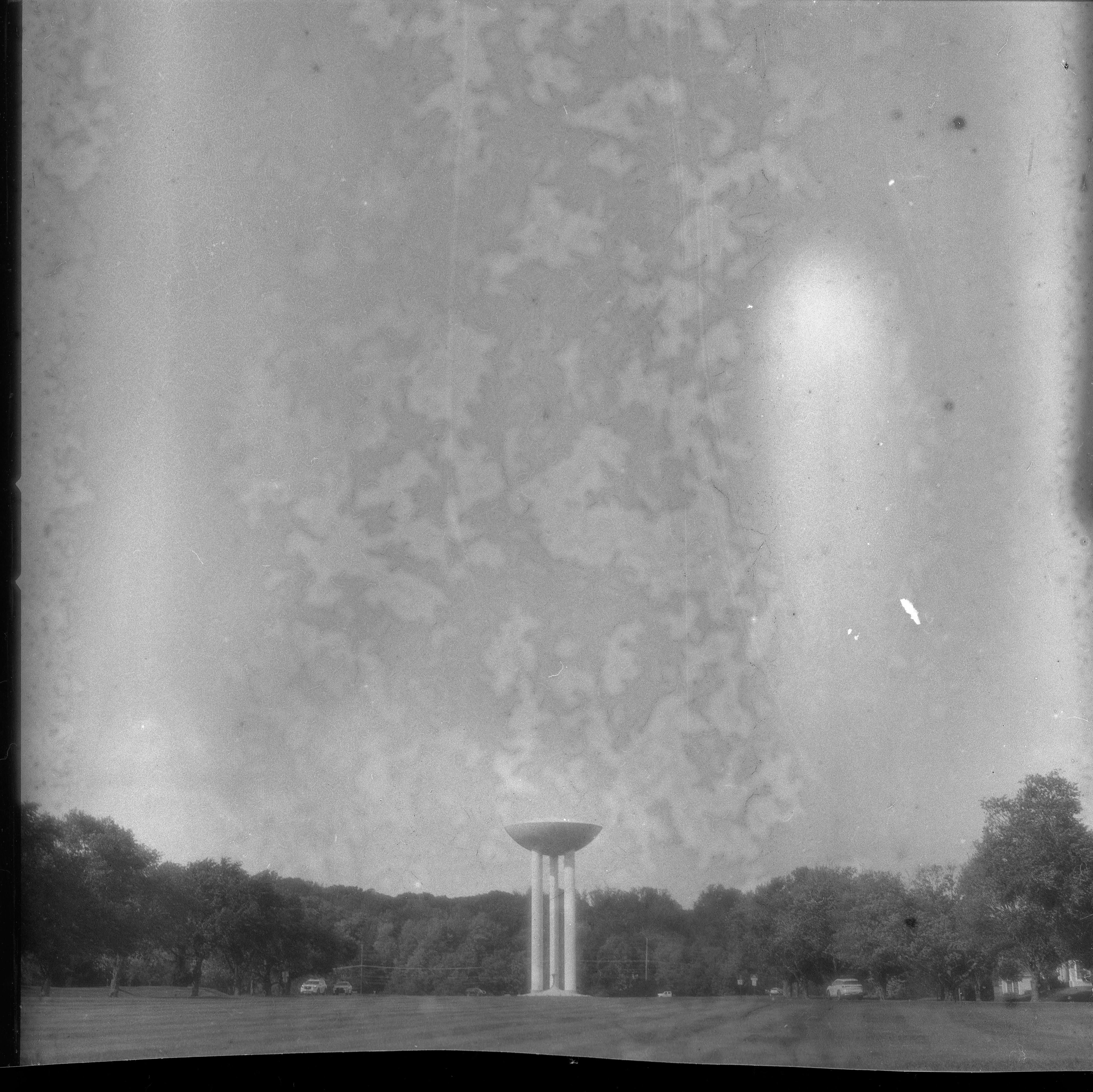
There is, however, this odd mottling throughout the roll, and given the shapes, I think this may also be an artifact of the plasticizers.
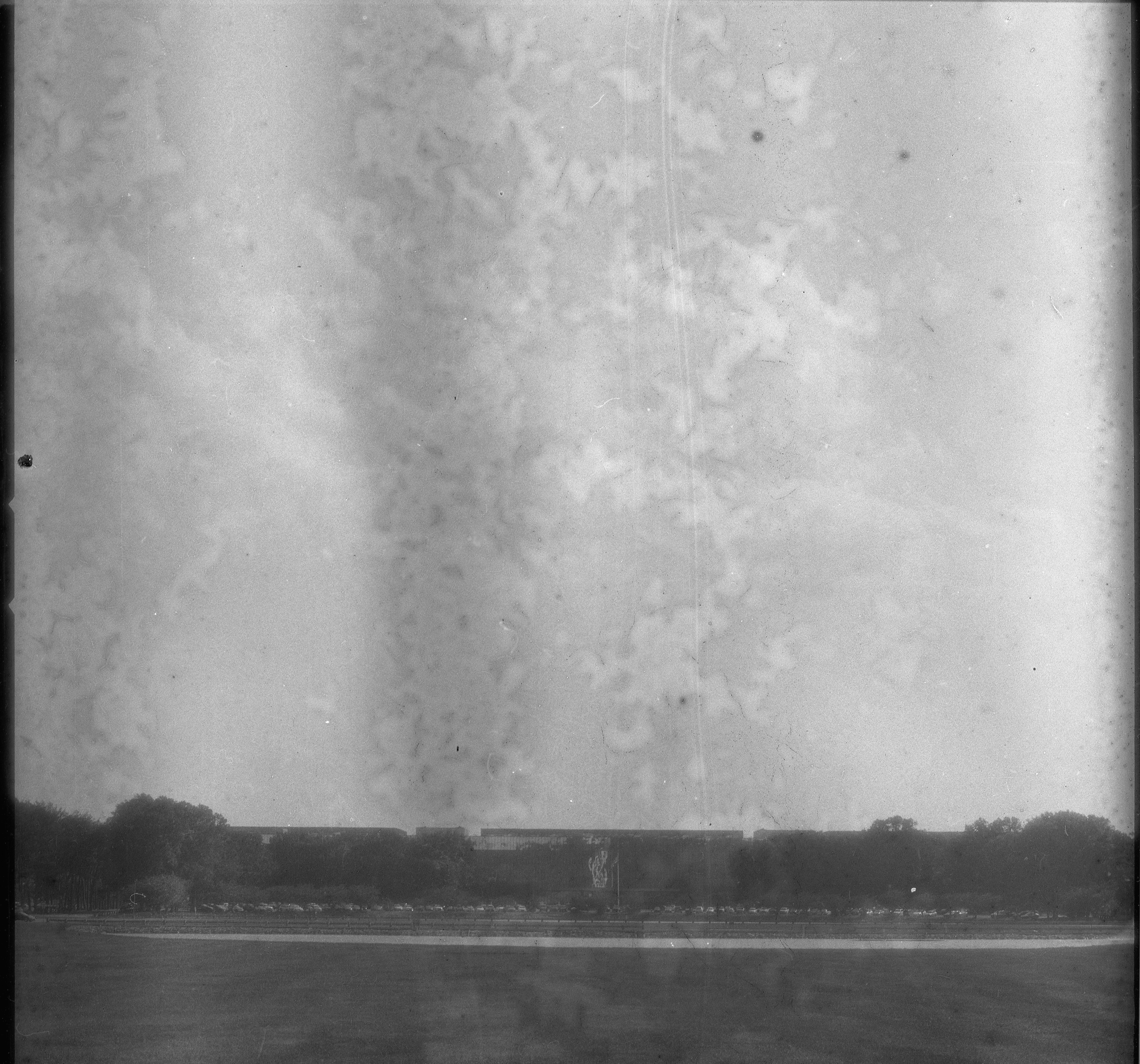
As we get further into the roll, the lines so present on the first roll get harder to find and more localized. In the shot of the diner, they're present mostly to the left of the sign on the roof. In the shot of the Chinese restaurant, they're visible at the left of the frame, but not nearly as disruptive as the previous roll's examples.
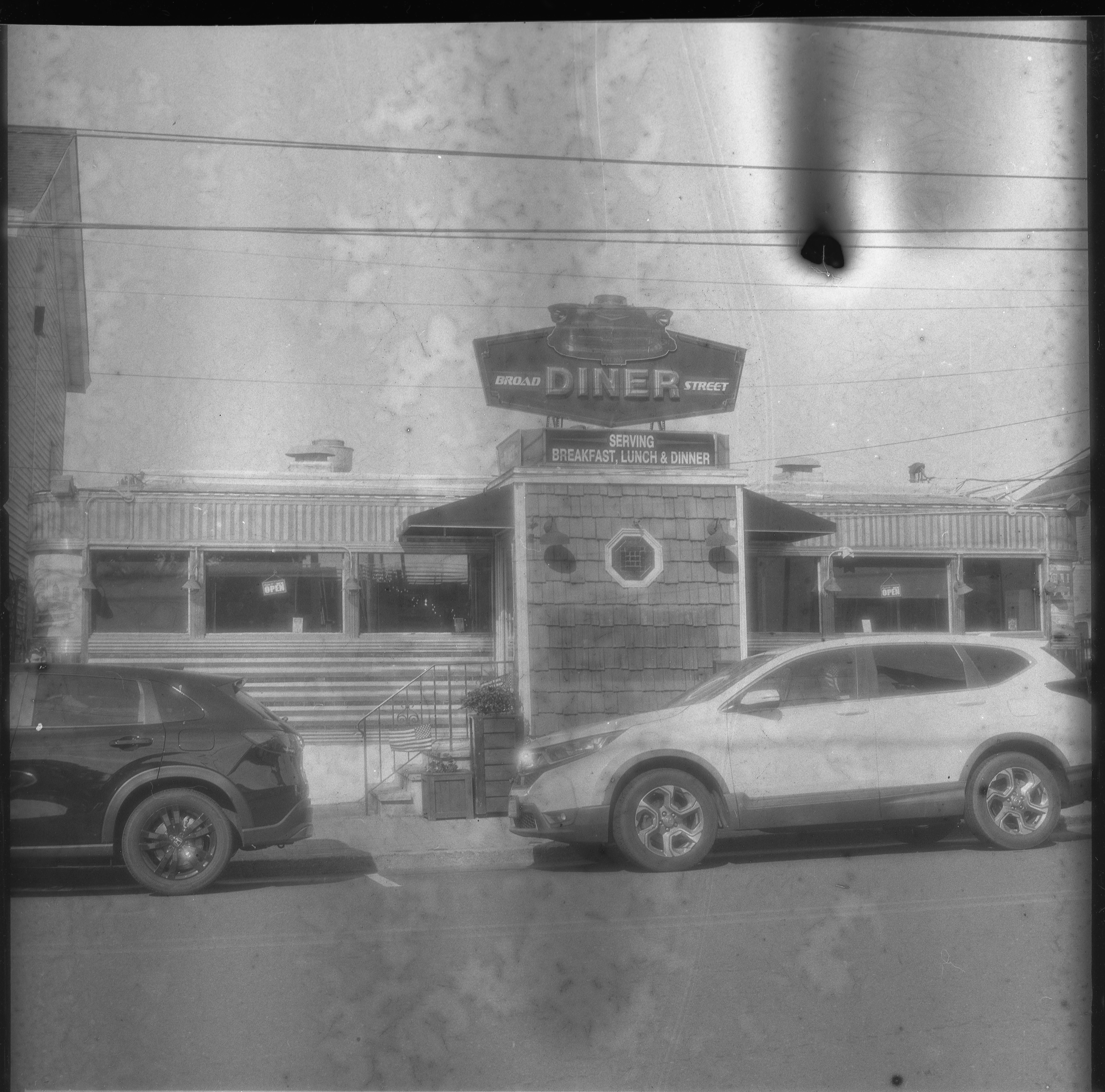
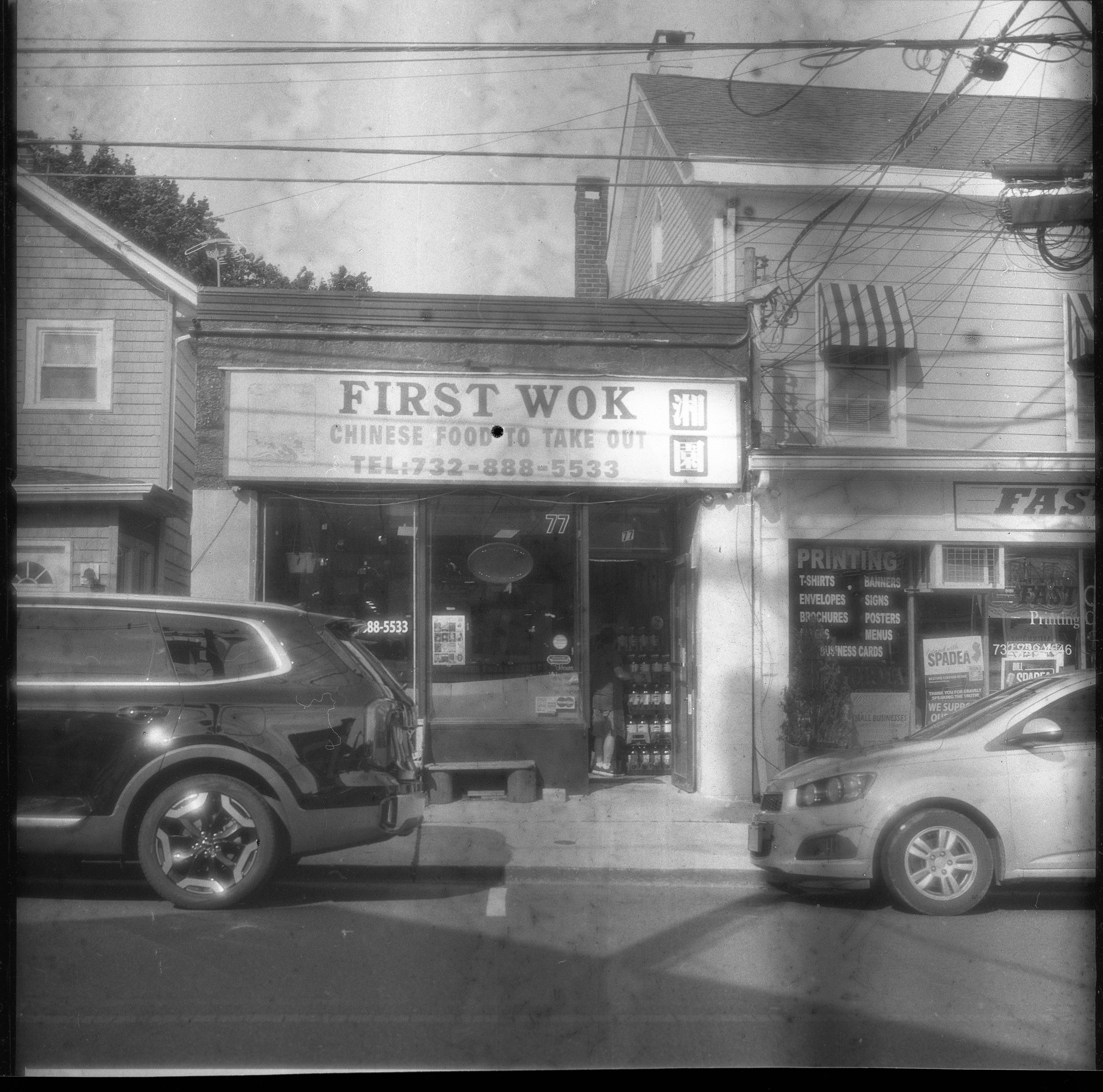
The last three photos continue the pattern where the lines are visible primarily at the left of the frame, but less visible than previous. There is more evidence of the hand-coated nature of the film with some verticle lines running through the photos and an occasional black dot where there was probably a bubble or something.
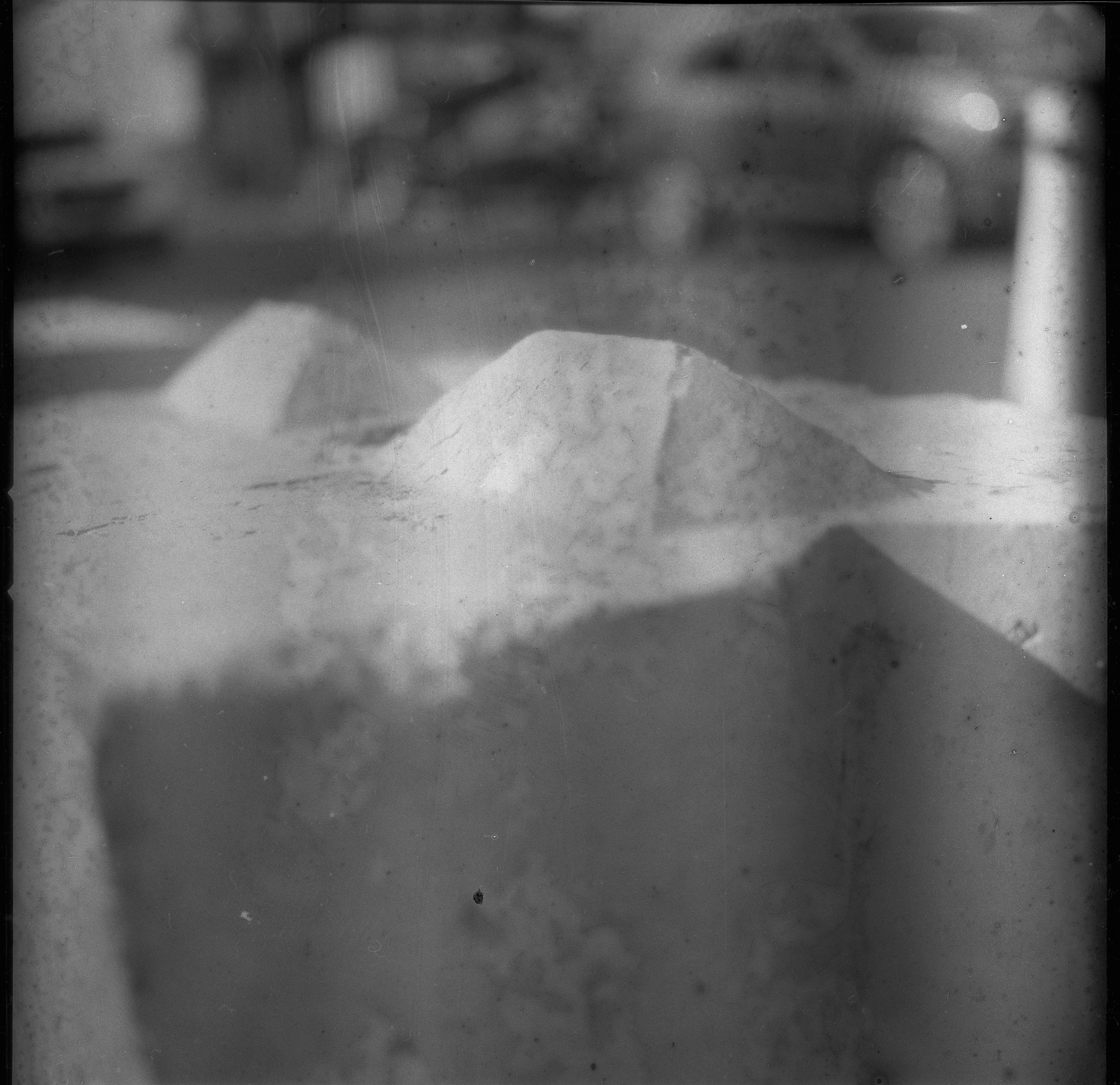
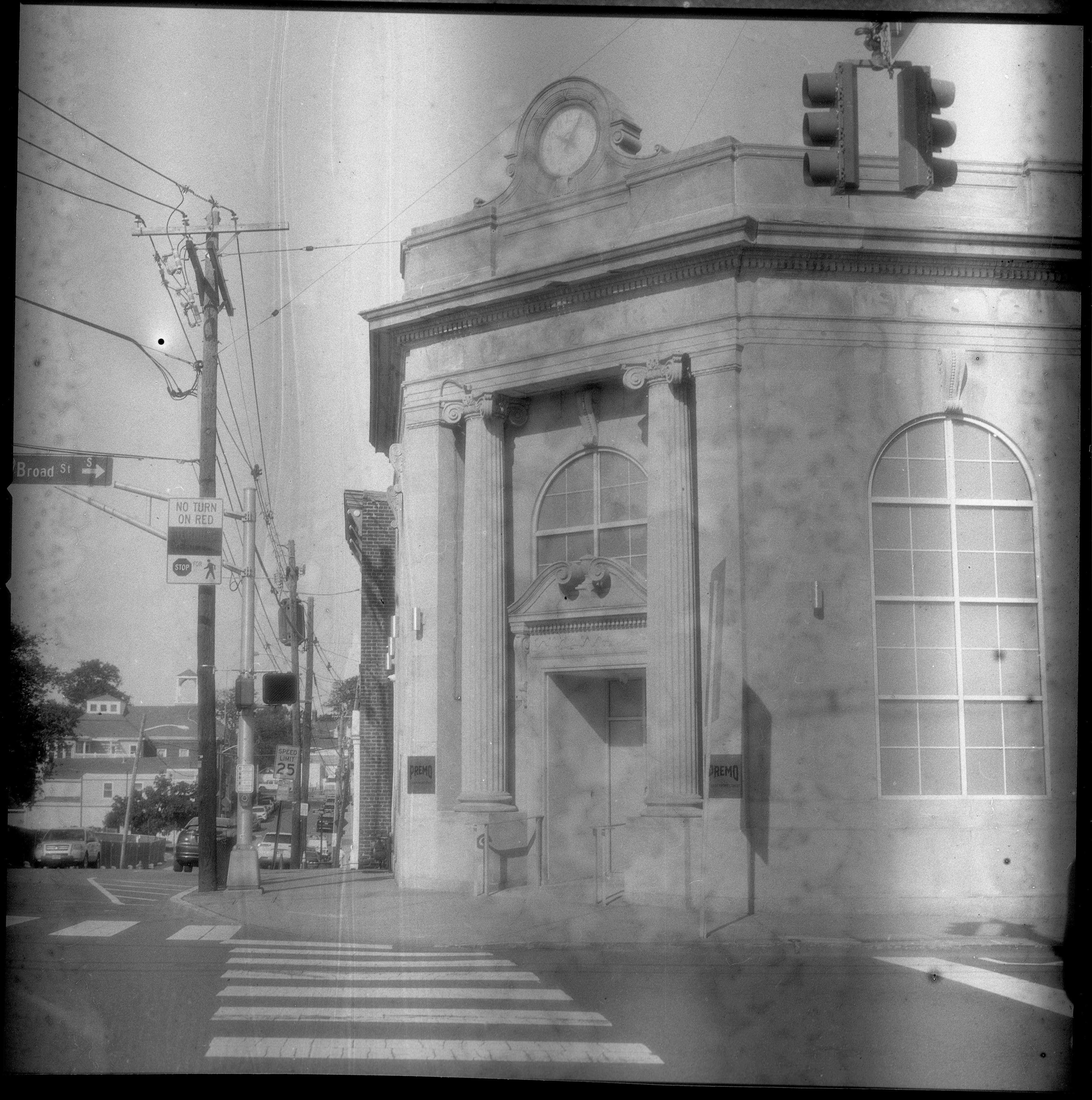
All told, the revised development process improved the film, but I suspect there may be some changes needed in the formulation to lower the level of plasticizers. I don't see this kind of mottling that I got on every shot in the examples I've seen posted elsewhere from other batches by people like Ari Jaaksi and Vitalii Kovalyshyn.
Posted at 1:16 PM
Link to this entry
I half recalled my friend Andre from L'viv mentioning on Mastodon a while back that a friend of his was making his own film in his garage, so when I saw this video by Ari Jaaksi a few weeks ago, I wasn't totally shocked. It was interesting; Ari's photos turned out quite well from the rolls he had been sent. I looked into the links that Ari posted to his video and found that I could actually buy up to four rolls of this film. I jumped at the chance (you can't really buy it right now, because the production amount is about 30 rolls per month and the queue is full, but it will reopen at some point). My four rolls of 120 Polyfilm showed up on Monday. This morning, Wednesday, I loaded a roll in what seemed to me to be the most appropriate choice to shoot it in, a Kiev 88CM. Ukrainian film, Ukrainian camera. I used a German lens, though, a Carl Zeiss Jena 120mm Sonnar and went to the nearby Twin Lights lighthouse and the town the lighthouse is in, Highlands, New Jersey.
I shot the whole roll, then brought it home and developed it. One of the two recommended developers is Rodinal, which was pretty much the only developer I used until fairly recently. I developed the roll in Rodinal 1:25 for 15 minutes in my PiraMX Developers Helper, which keeps the temperature at a steady 20 degrees Celsius. Let the film dry for a few hours, and scanned it. I'm posting the whole roll. Ihor Poliakov, the guy who makes the film, said in his note that came with the film that it is not perfect, and that's very true. I got some very odd results that I didn't see in the online posts of film from other batches.
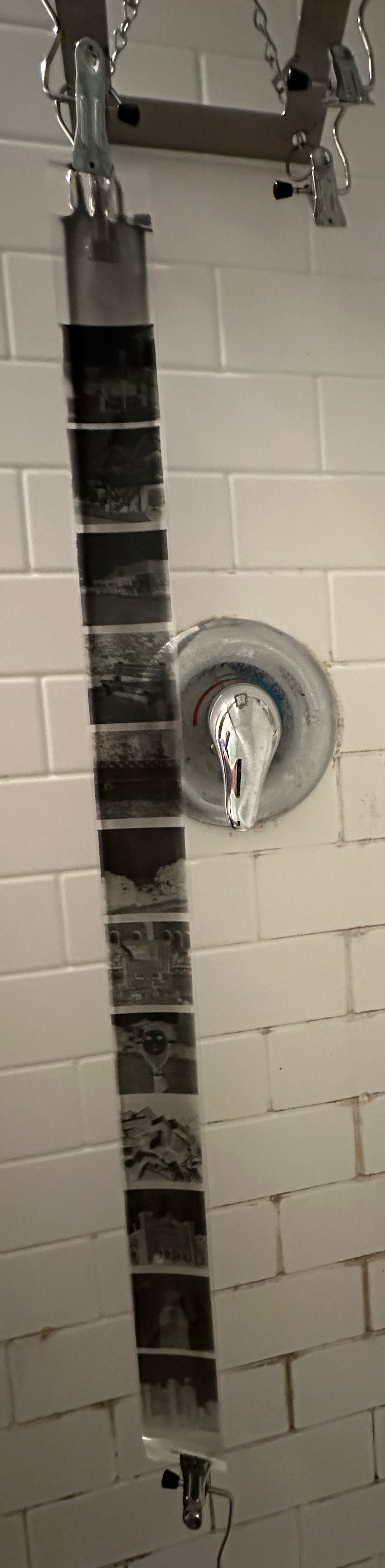
This was the roll hanging to dry in the shower after development. The first thing I noticed was the appearance of the exposed emulsion at the top of this strip. That emulsion doesn't spread the entire width of the film, and makes me think this film, or at least this batch, has an issue that other batches didn't. My understanding is that the film is coated twice, once with something that actually sticks to the base and once with a photosensitive emulsion. It's not clear to me if the first coating is also photosensitive, but there are clearly two photosensitive coatings on this particular roll, and one of them did not span the entire width of the film.
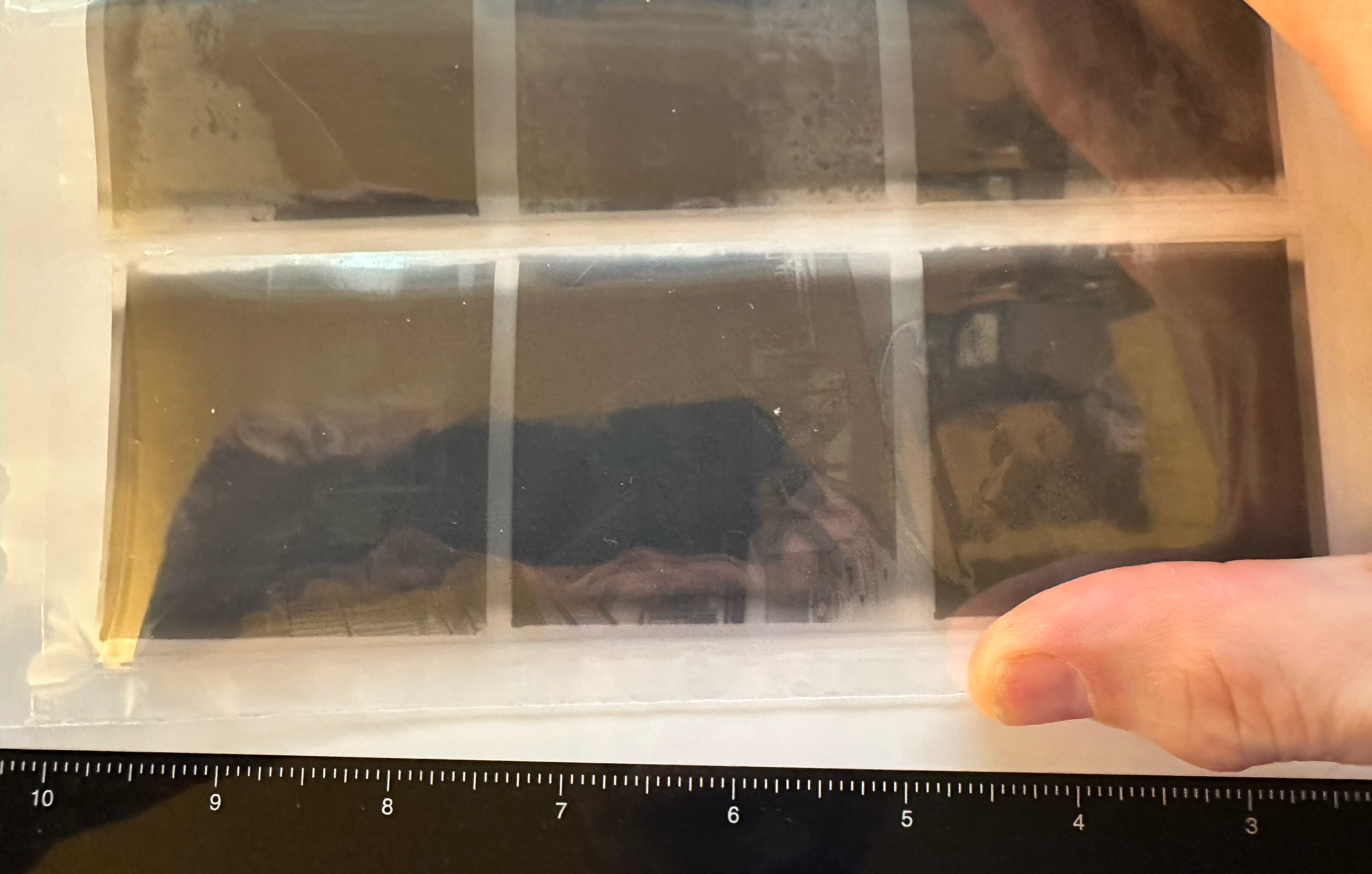
Looking more closely at the film, the space between frames also shows this coating of emulsion showing some degree of exposure, not covering the entire width of the film.
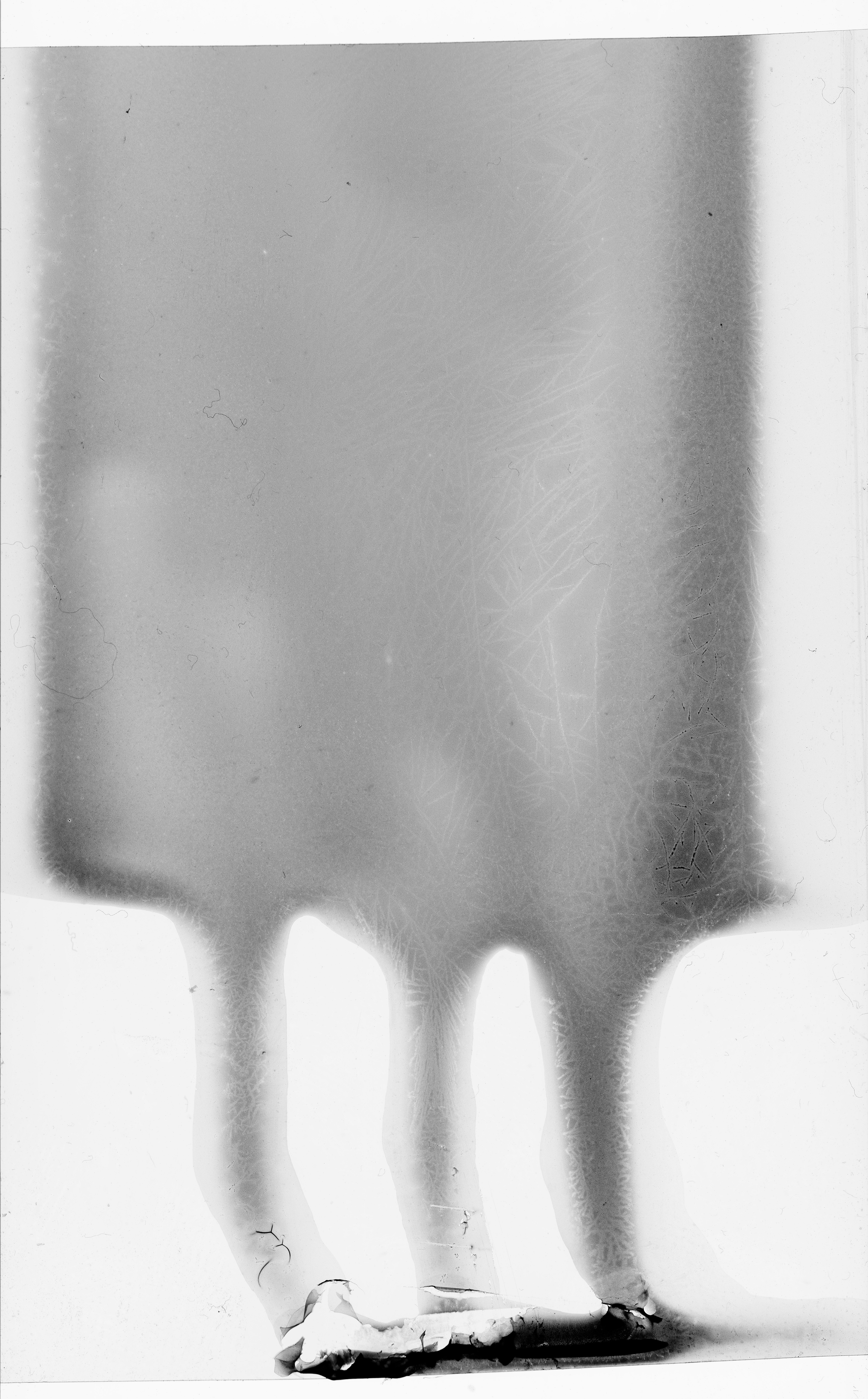
This is a closer look at the blob of exposed emulsion that's visible at one end of the film.
I don't know if this happened with all the rolls in this batch, or just this one. This is batch 260526. I'll be looking out for the other three rolls I have to see if this happens with those or if this was a one-off.
I didn't do any adjustments to the raw scans I made of the developed film, so they look a little flat. I spotted things that were identifiably dust, but other flaws in the emulsion were left as is.
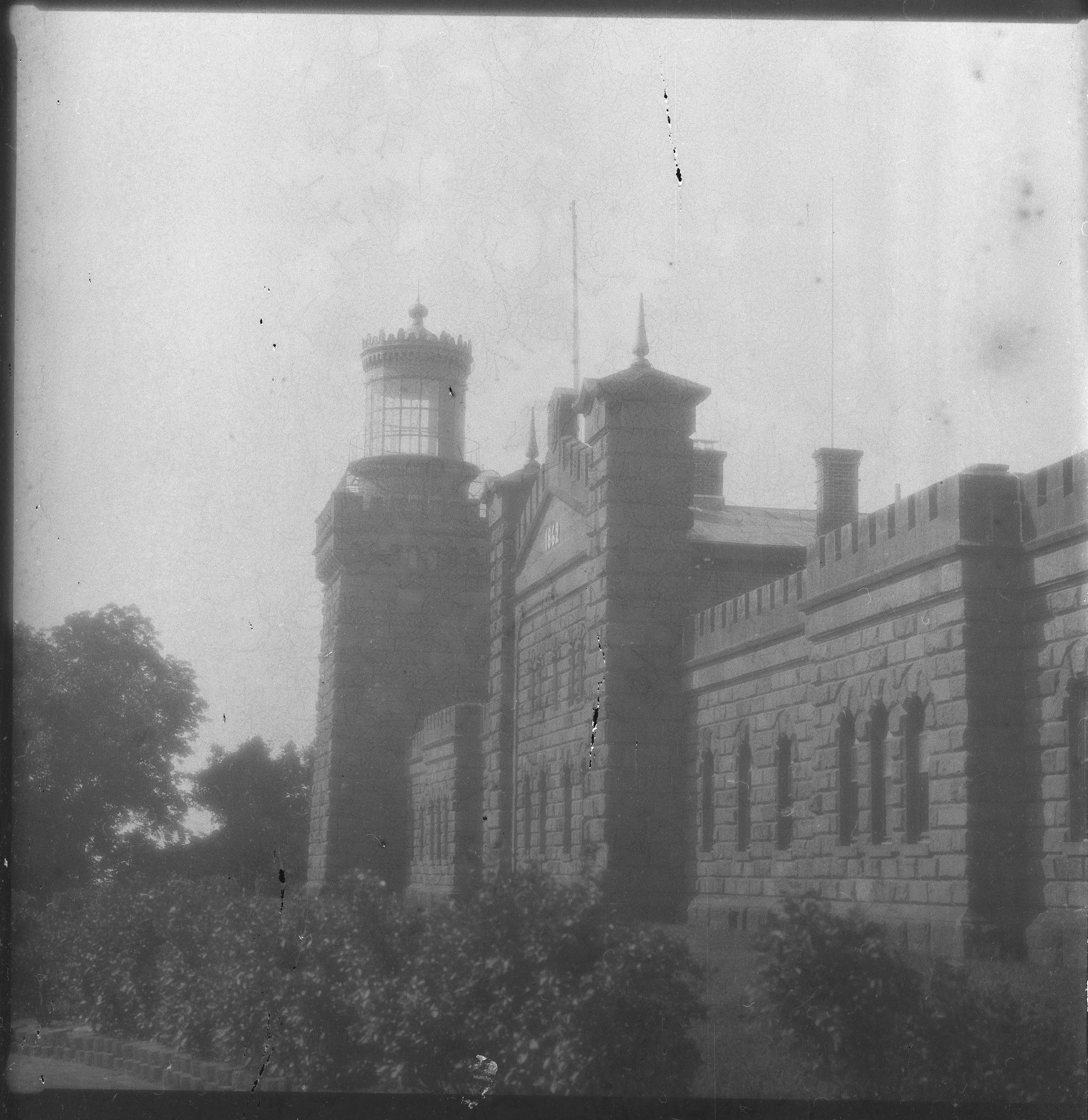
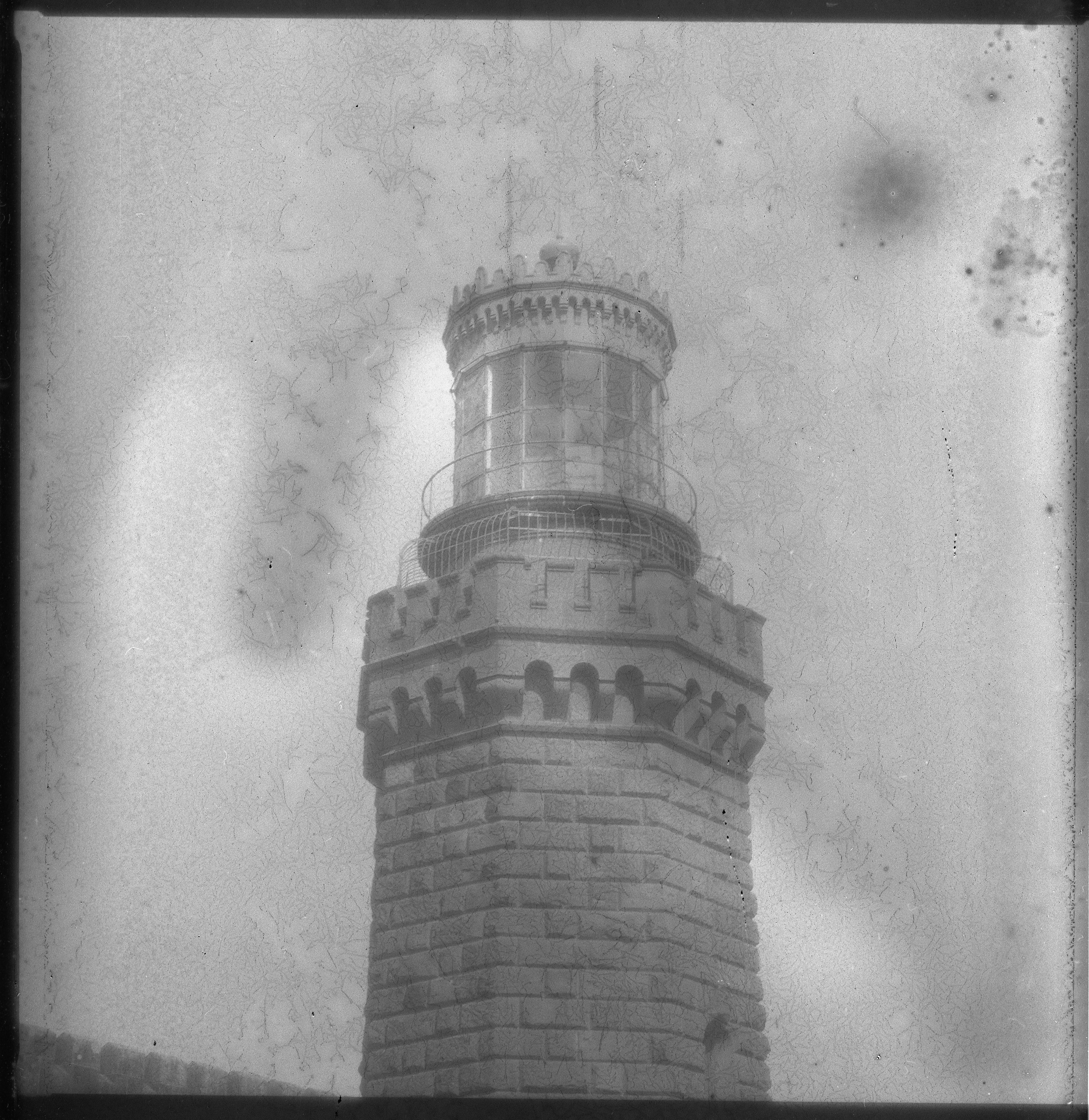
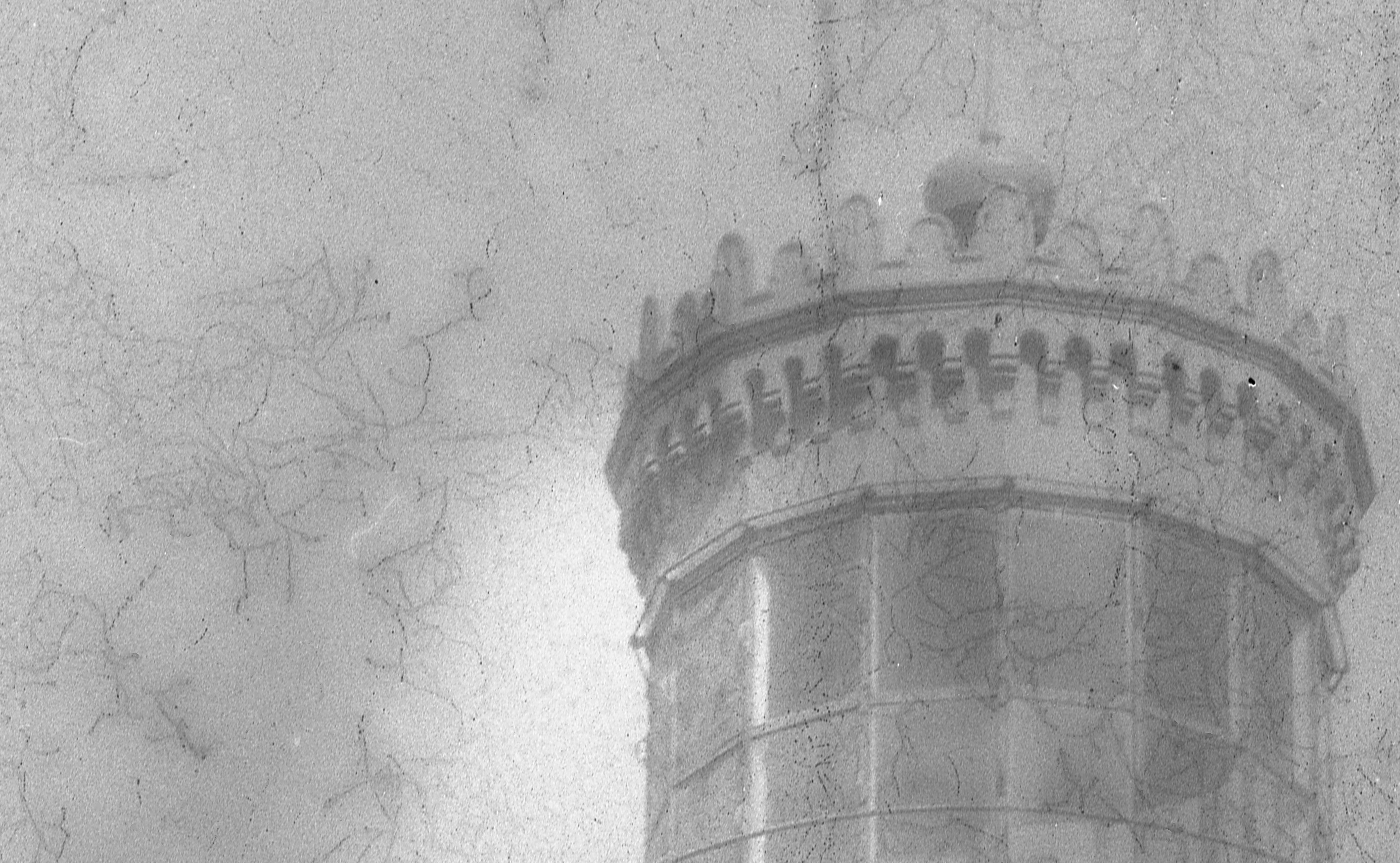
The first couple of shots show some interesting artefacts. Black dots off to the right remind me of little concentrations of silver I've occasionally seen in wet plate, oysters and comets. There are a couple of spots where the emulsion looks damaged, one in the sky and one on the center body of the lighthouse building of the first shot. Then there's the lines. They're visible somewhat in the sky on the first shot, but much more visible in the second. They look like some sort of crystalization of the emulsion or something, and they're present on every shot on this roll. This 100% zoom of the second photo gives a better look at it.
The next several shots all show the crystalization to greater or lesser extent.
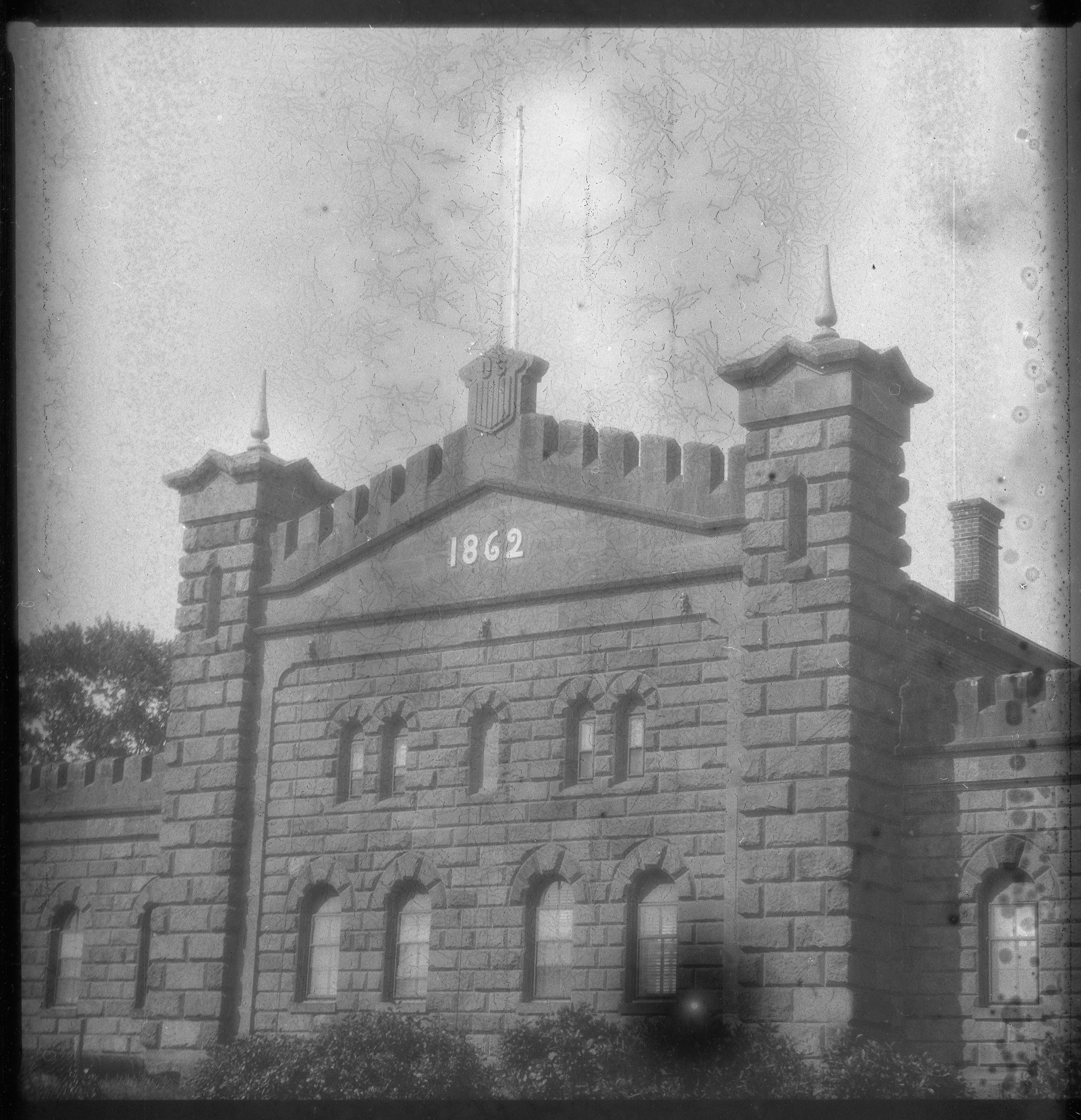
The next three photos show the increasing degree of difference in exposure at the edge where the two layers of photosensitive emulsion give way to a single layer, since the one layer didn't cover the entire width.
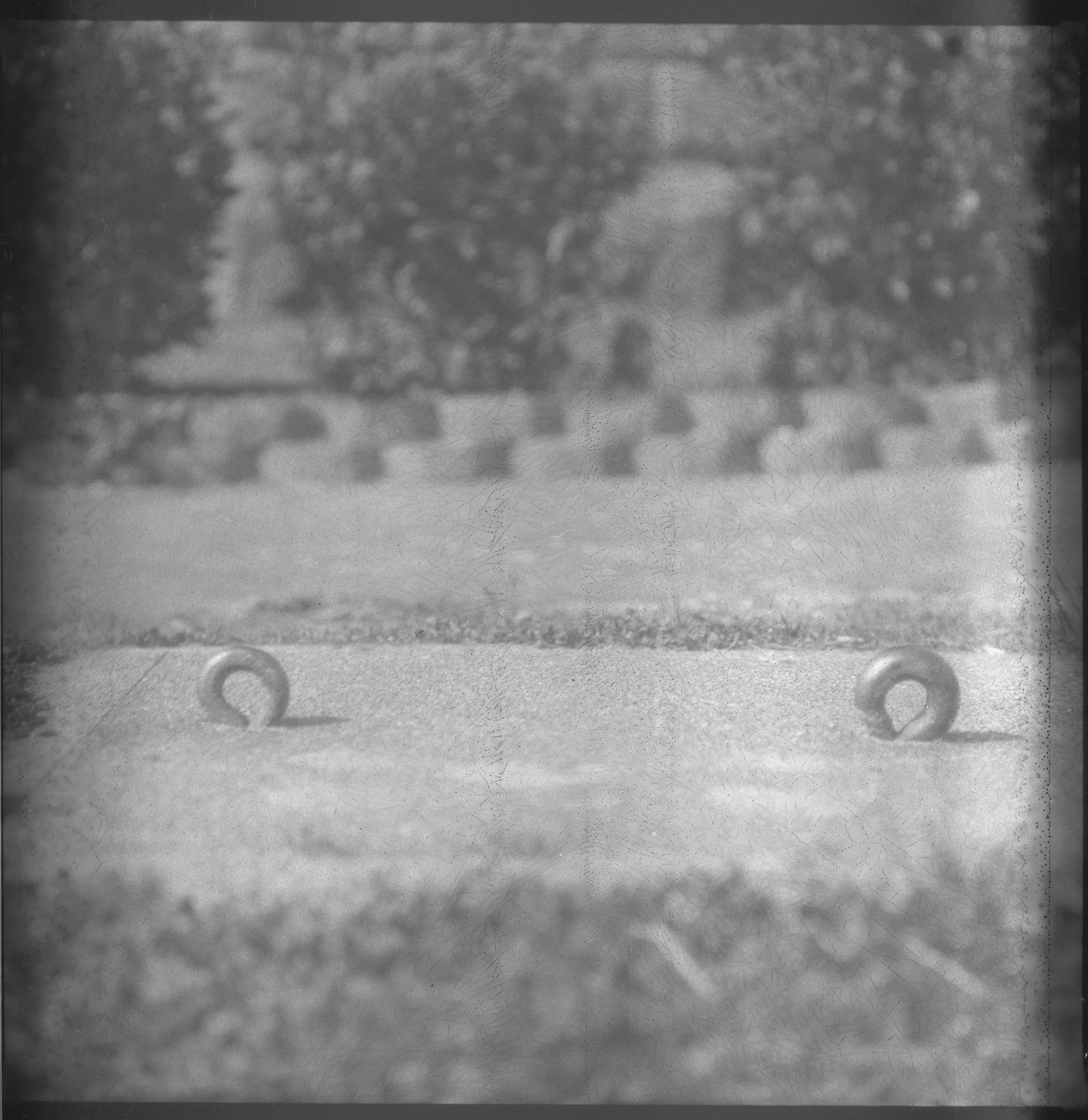
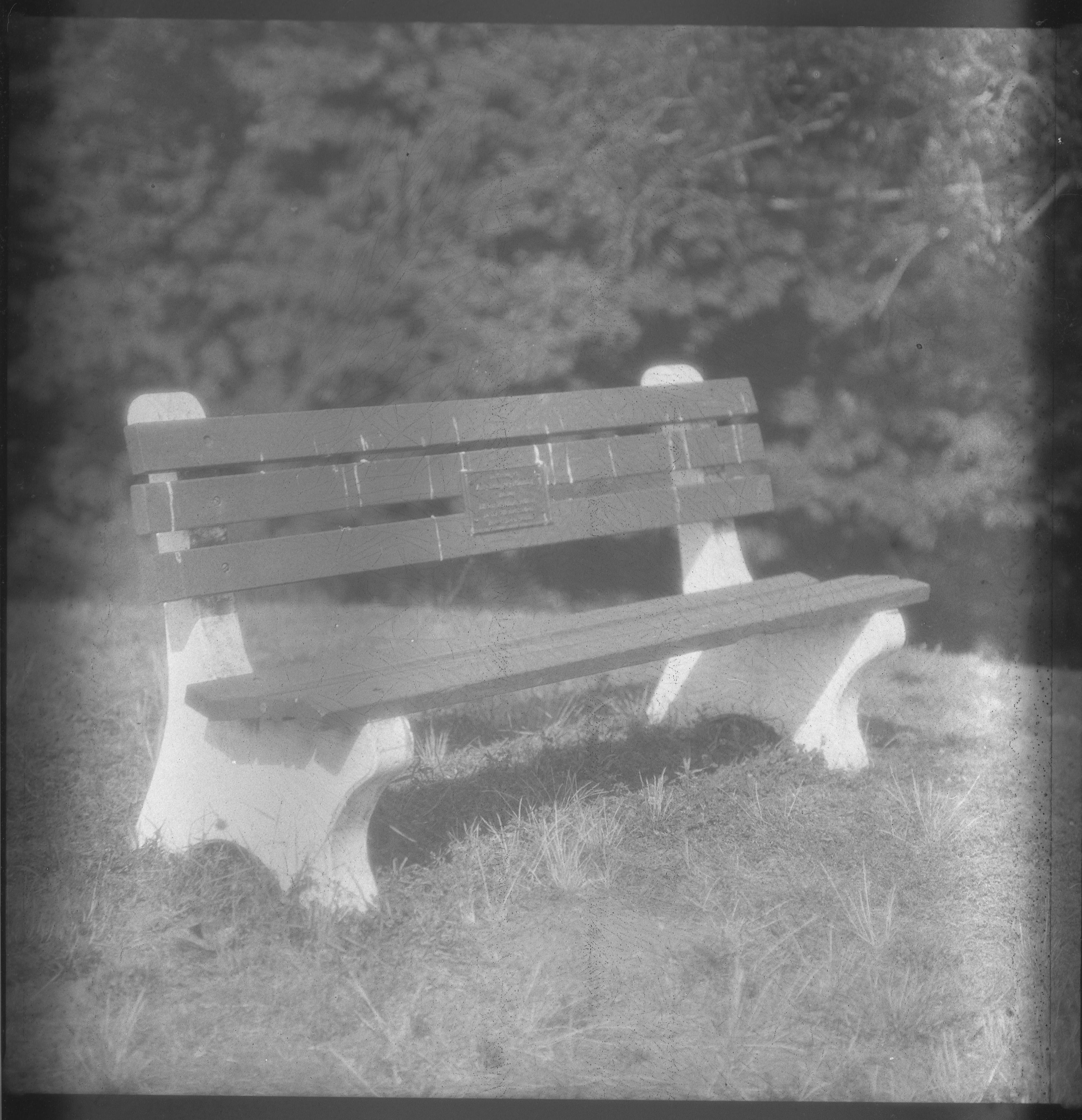
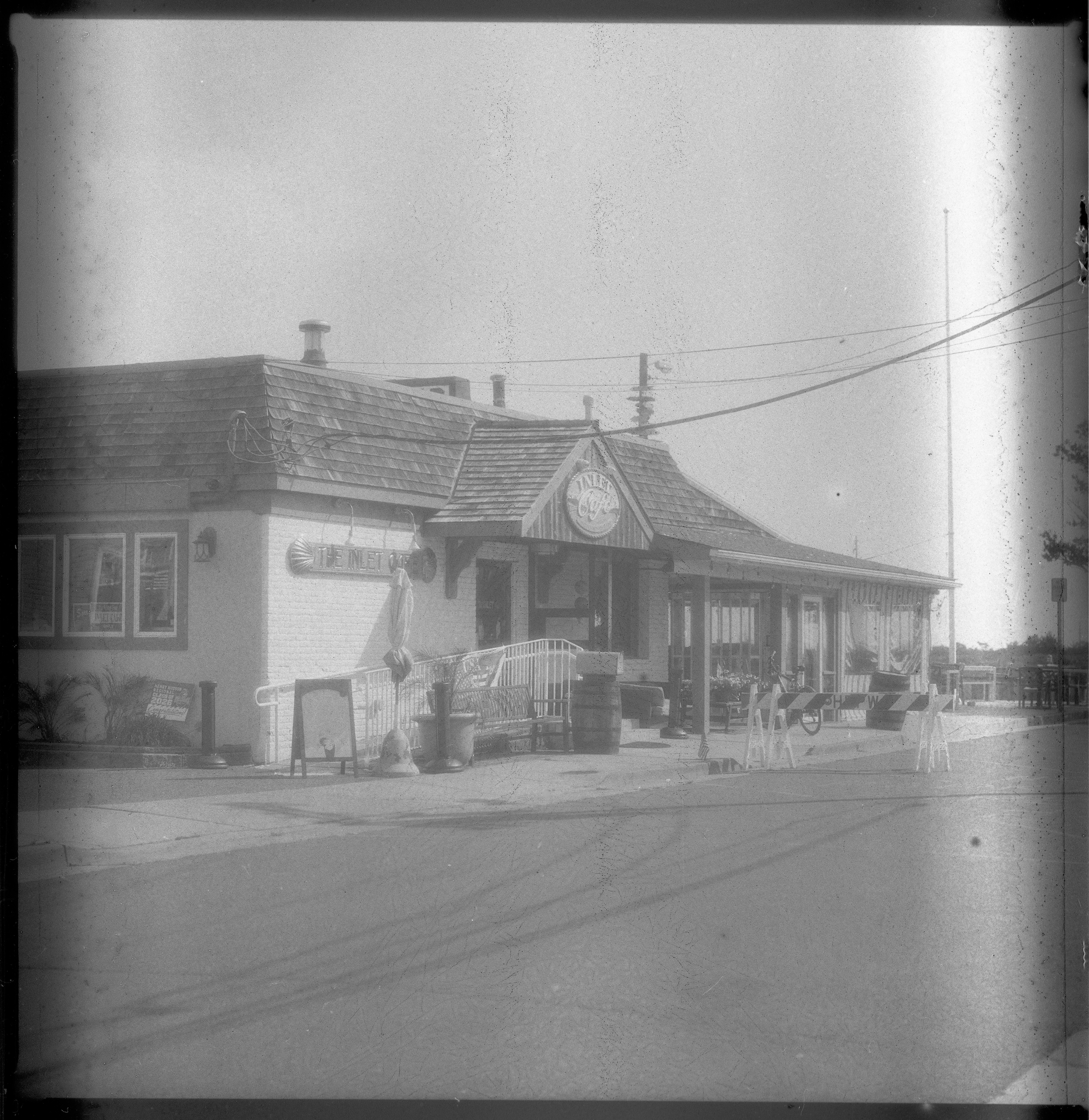
The final two shots show another interesting oddity that may be another form of crystalization visible mainly in the upper right of each shot.
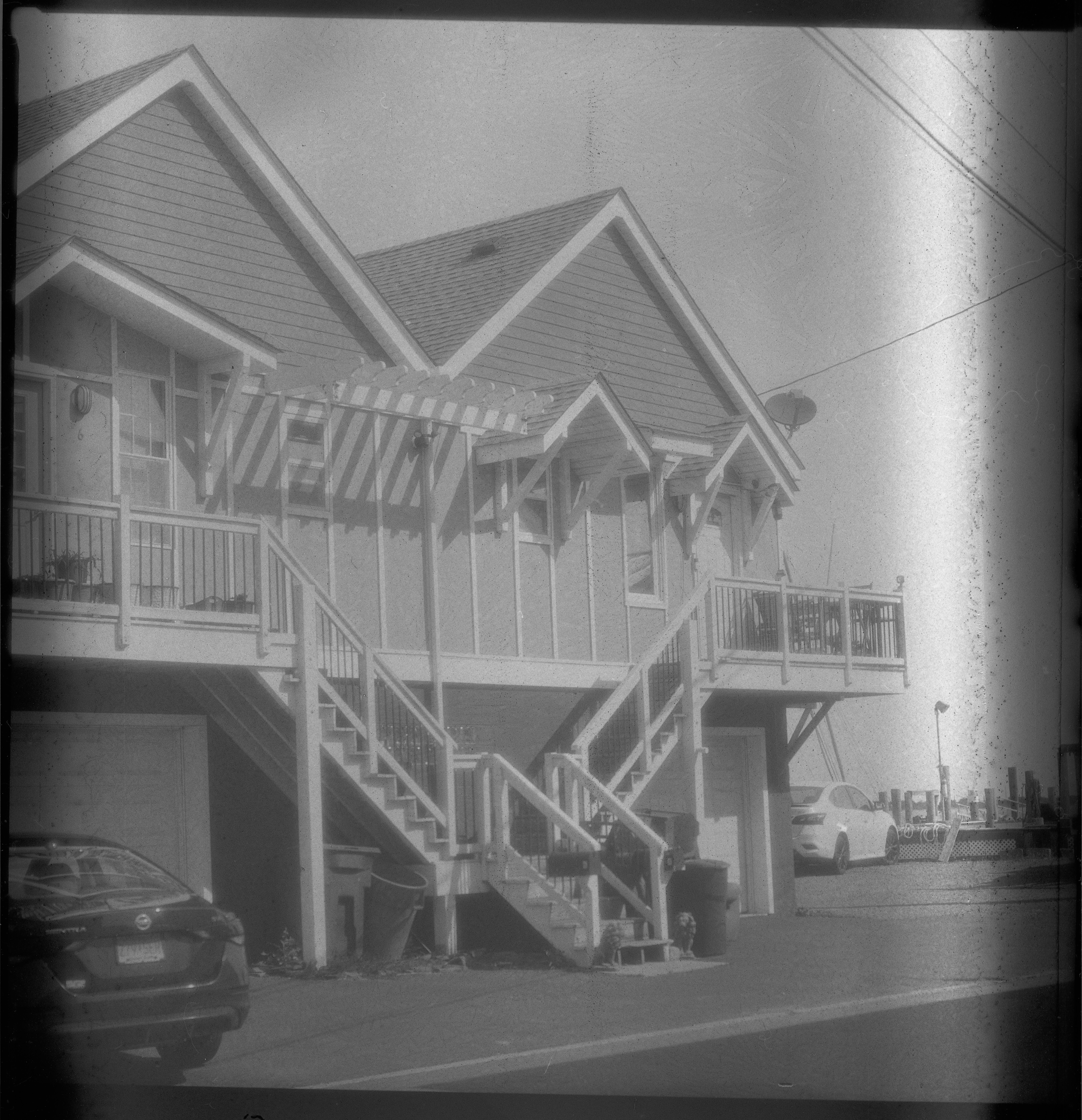
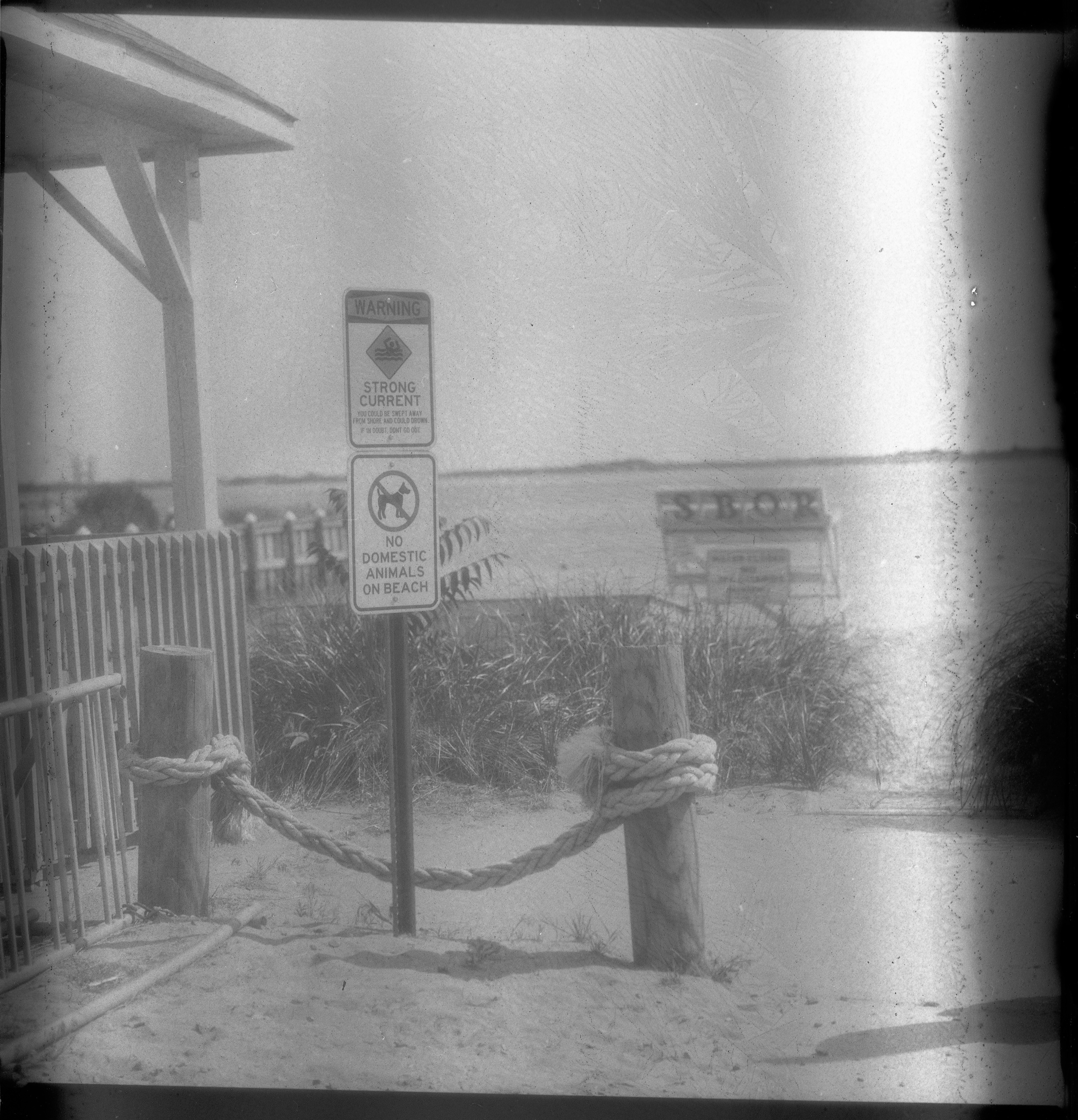
My first thought when I saw the scans was that maybe there was reticulation, but I developed the film in my PiraMX Developer's Helper, which keeps the temperature constant, and the water I used was not at a signficantly different temperature. So I don't think it was reticulation.
It will be interesting to see if other users who got this batch get similar results, and if I get similar results from the other rolls I have. I knew when I bought these that it was an experimental film, so I'm not surprised there are flaws.
I shared this post with Ihor on Patreon before posting it, and he thinks the lines are caused by the plasticization he uses in making the emulsion. He thinks spending more time washing the film can take care of that. He sent out e-mail suggesting exposure at 25-30 ISO, dropping development to 12 minutes in Rodinal 1:25 from 15-18, pre-washing for 2-3 minutes, and 5 minutes of rinsing at the end. I'll give that a try for the next roll and see what happens.
Posted at 10:24 PM
Link to this entry